Russian Farmers Request Abolition of Dairy Product Labeling Due to Rising Costs
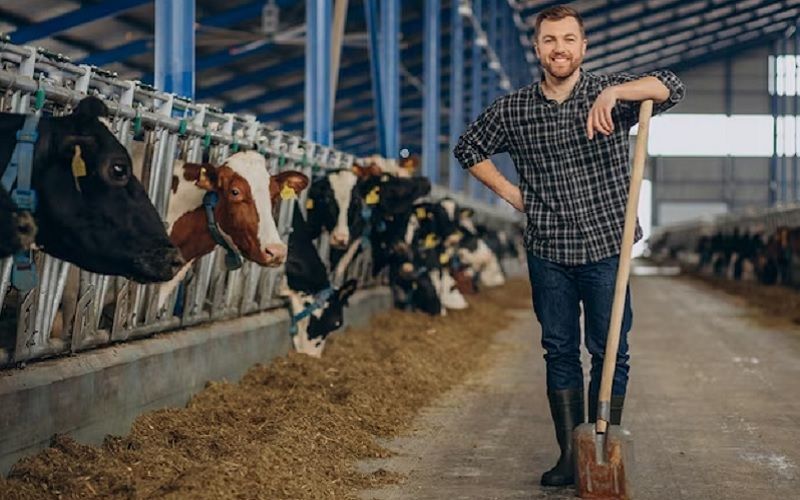
The initiative comes fr om the association "People's Farmer," which sent the corresponding appeal to the head of the department, Anton Alikhanov.
According to market participants, the implementation of the labeling system required significant investments. On average, the costs for connecting and working with the system reach about 1 million rubles with revenues of 2.5–3 million rubles, making the business of small farms unprofitable.
Additional burdens are created by:
- the need to hire staff (operators, IT specialists),
- purchase of equipment (printers, scanners, software),
- regular expenses for system maintenance.
As a result, the production cost, according to farmers' estimates, has increased by 30–50%, and in some cases, profitability has effectively been nullified.
Some farms have already stopped milk processing or reduced production, and up to 70% of small producers are considering going underground or closing their business.
Technological Constraints
The problem is especially acute in remote regions wh ere there is no stable internet. This leads to disruptions in the introduction of products into circulation and losses of perishable goods.
Farmers also note a high level of manual labor: in small farms, up to several thousand labeling codes a day have to be applied manually.
Effectiveness of the System
The criticism concerns not only the costs but also the effectiveness of the labeling itself. According to producers, the system tracks the movement of packaging but does not guarantee the authenticity of the contents.
Meanwhile, according to the Federal Service for Veterinary and Phytosanitary Supervision (Rosselkhoznadzor), the share of counterfeit dairy products on the Russian market reached 17.68% by the end of 2025, which, according to farmers, indicates the persistence of the problem.
Position of the System Operator
The Center for Advanced Technology Development (operator of the "Chestny Znak" system) does not confirm the decline in farmers' activity.
According to their data, the volume of products introduced into circulation by peasant farms and cooperatives in 2025 was 72.9 thousand tons, which is 8.8% more than the previous year.
The center emphasizes that labeling has already yielded results:
- the level of discrepancies between raw materials and finished products has decreased to almost zero,
- sales of expired products have decreased by 199 times,
- the sale of hundreds of millions of units of unsafe products has been prevented.
Increased Pressure on the Industry
The situation is complicated by additional factors, including livestock disease outbreaks. According to experts, losses from pasteurellosis at the beginning of the year amounted to up to 90 thousand heads, which increases the financial pressure on farmers.
There are objectively problems with labeling for small and medium businesses, noted former Deputy Minister of Agriculture Leonid Kholod. According to him, the initiative should be listened to, as agricultural producers play an important role in the agro-industrial complex economy. A special control mechanism should be applied to them, asserts Leonid Kholod.
Experts note that in the current conditions, small farms need a separate regulatory approach. In particular, the possibility of introducing exceptions or simplified requirements for small producers is being discussed.