Researchers find 2,000-year-old butter in a bog
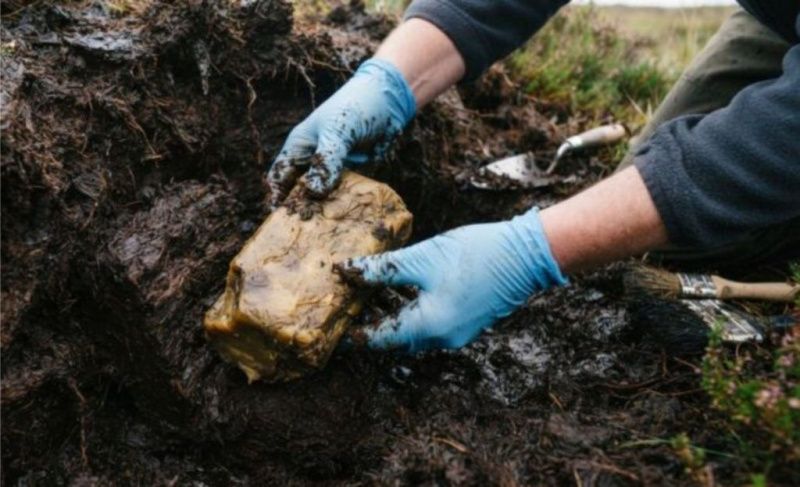
Ancient deposits with a waxy white or yellow appearance have been found buried in peatlands in Ireland and Scotland. Known as bog butter, the material has been recovered both inside wooden containers and wrapped in animal skins or membranes. Its preservation has provided evidence about dairy production, food storage and diets from periods before refrigeration.
A study published in Scientific Reports examined 32 Irish samples using radiocarbon dating and stable-isotope analysis. Twenty-six were clearly compatible with fat from ruminant milk. Three more also showed strong evidence of a dairy origin. The results indicate that the deposits were made over a period of at least 3,500 years, from the Bronze Age, around 1700 BC, to the 17th century.
Peatlands can remain permanently wet, acidic and low in oxygen. Those conditions restrict the activity of organisms that normally break down organic matter. They can therefore preserve fat, wood and other remains that would usually disappear in ordinary archaeological settings.
The material does not remain identical to fresh butter. After centuries underground, its fat undergoes chemical changes and can become harder and more wax-like. Even after those changes, molecules and isotopic signatures may survive, allowing researchers to study its source. The surrounding peat can also preserve wooden vessels that would quickly decay in drier environments.
The deposits are associated with the storage of fat and surplus dairy production, although their purpose was not necessarily the same in every period or community. Before modern refrigeration, rural populations needed ways to keep perishable food for extended periods. Butter was a nutritious product and an important part of economies based on livestock and milk production.
The findings also provide information about agriculture and food organisation during the Bronze Age and later periods. Dairy fat from cattle and other ruminants indicates that milk production formed part of the communities’ activities. The presence of quantities large enough to bury suggests that some groups generated dairy surpluses. Wooden containers, their construction and their placement in peatlands add evidence about everyday technology and storage practices.
Researchers said the deposits cannot be explained by a single motive because they were made across thousands of years and by different communities. Their chemical composition, dates and associated containers allow archaeologists to examine changing approaches to farming, animal husbandry, food preservation and consumption.