Long-Term Breeding Strategies Propel Victorian Farms to the Top of DataGene’s Genetic Rankings
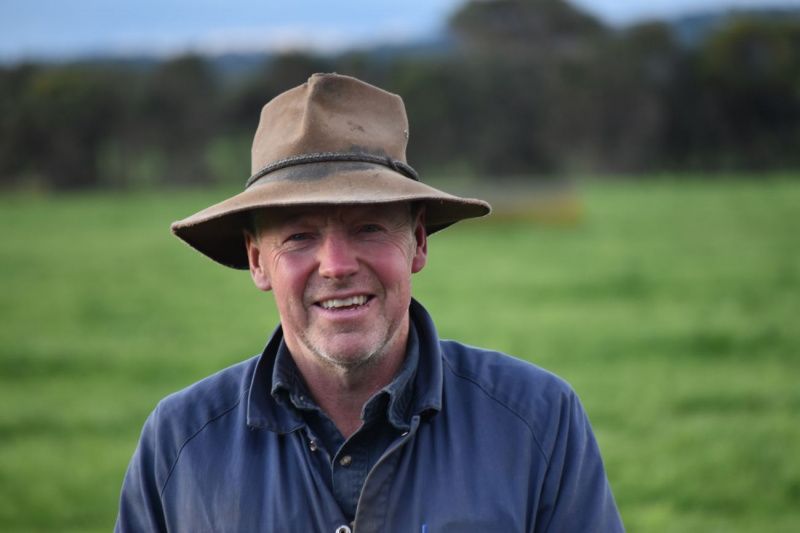
Tracy’s herd ranked second in the April evaluation. According to DataGene Stakeholder Relations Specialist Peter Thurn, the farm has spent years selecting bulls from the Good Bulls Guide in line with its breeding objectives.
“The Tracy and Parish herds show that it takes a long time to move a herd’s average genetic merit, but it can be done if you stick to a process,” Peter Thurn said.
A significant proportion of the cows in Tracy’s herd have been genomically tested. The farm also uses the Herd Data App and participates in the GINFO programme. In recent years, its breeding selections have placed greater emphasis on health and fertility traits.
The Parish family of Bambra entered the top three Australian Jersey herds for the first time. The farm ranked third for the Balanced Performance Index (BPI), with an average score of 210, and second for the Health Weighted Index, with 152.
Compared with the April evaluation, the herd moved from ninth to third place for BPI, from sixth to second for HWI, and from 12th to seventh for the Sustainability Index (SI).
“If you define your goal, stick to it and make sure your bull selection is aligned with your goals, you will be successful,” Thurn said.
Another notable result was achieved by Basil and Liam Ryan of Grassmere. Their Holstein heifer Numeralla Bigsur 7662 became Australia’s leading genomic heifer for both BPI and HWI for the first time. She recorded a BPI of 882 and an HWI of 938. Her HWI score placed her ahead of all genomically tested females included in the August evaluation.
However, Jelbart 17369 was the leading mature Holstein cow for HWI, with a score of 876. DataGene’s media release refers to Numeralla Bigsur 7662 as the leading HWI cow in the Holstein breed, but the detailed brochure classifies her as a genomic heifer, while Jelbart 17369 heads the ranking of mature cows.
Bryan and Jo Dickson’s Emu Banks herd in Terang retained first place among Holstein herds for BPI, with an average score of 451. Emu Banks also ranks second for both HWI and SI.
Geoff and Estelle Boyd’s herd in Foster ranks second among Holstein herds for BPI, with an average score of 405. The Kitchen family of Boyanup, Western Australia, is in third place with a score of 397.
Wilara Almamater Collie VG86, owned by the Henry family of Tinamba, became the leading Holstein cow for BPI, with a score of 934. She also topped the Sustainability Index ranking for genomically tested cows, with an SI of 1,190.
Emu Banks Manhattan Tiffany 13260 VG85 ranked second among Holstein cows for both BPI, with 909, and SI, with 1,164. Emu Banks Rodney Tiffany 16191 became the leading genomic heifer for sustainability, with an SI of 1,056.
In the Jersey breed, Con and Michelle Glennen’s White Star herd in Noorat returned to first place across all three key indices: BPI, HWI, and SI.
Araluen Park Jiggy Sandra EX-92 was once again named the leading Jersey cow for BPI, with a score of 777. She also heads the breed’s Sustainability Index ranking with 1,146. Beulah Gislev H Bouy VG89 became the leading Jersey cow for HWI, with a score of 678.
The Australian ABV system uses three primary breeding indices:
- BPI combines production, type, and health traits according to their economic value.
- HWI places greater emphasis on fertility, mastitis resistance, calving ease, gestation length, and feed efficiency.
- SI focuses on reducing emissions intensity while maintaining genetic progress in economically important traits.
Only minor methodological changes were made in the August evaluation. DataGene recorded a slight uplift in Fertility ABVs for Jerseys following revisions to reproductive performance evaluations in the United States by the Council on Dairy Cattle Breeding. The updated US data affected international Interbull breeding values and subsequently Australian ABVs.
DataGene has also begun displaying information in DataVat on tested animals carrying the so-called slick gene. This naturally occurring genetic variant is associated with a shorter, sleeker hair coat that is believed to improve cattle’s tolerance of hot and humid conditions. DataGene does not conduct the testing itself but reports information supplied by third-party laboratories.
DataGene is responsible for genetic evaluation and dairy herd improvement programmes in Australia. The organisation is an initiative of Dairy Australia and the herd improvement industry.