Karnataka Launches ₹3.8 Crore Azolla Mission for Dairy Farmers
A state-wide fodder programme
Karnataka’s animal husbandry and veterinary services department is introducing 12,000 azolla production units across the state’s 240 taluks. The ₹3.8 crore initiative comes as drought has reduced fodder reserves and disrupted supplies from neighbouring states.
Fodder stocks remain particularly limited in 22 taluks, where available supplies cover less than 20 weeks. Across the state, the department estimates average reserves of between 30 and 40 weeks. Officials have raised concerns about livestock nutrition and the cost of cattle-rearing if dry conditions continue.
Small units near cattle sheds
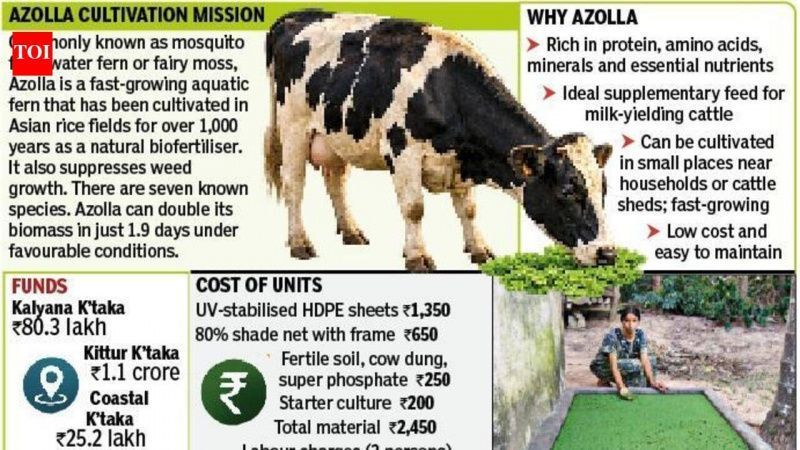
Azolla is a fast-growing aquatic fern containing protein, amino acids, minerals and other nutrients. The programme promotes it as supplementary feed, especially for milk-producing cattle. It can be grown close to a household or cattle shed in a compact structure supplied with clean water.
Each unit is expected to cost about ₹3,150 and occupy a space of roughly 10ft by 4ft by 1ft. The installation will use UV-stabilised HDPE sheets, shade nets, support frames, soil, cow dung, super phosphate, starter culture and labour. Farmers will not pay for these inputs, and participants will be trained in cultivation, harvesting and processing.
“The idea is to help small and marginal livestock farmers produce a nutritious supplementary feed without depending on conventional fodder supplies,” an official said. Units will be distributed through gram panchayats, with priority for livestock farmers who have enough space and access to clean water.
Other measures to expand feed supplies
Every unit will be geo-tagged, while beneficiary information and photographs will be recorded under the VB-G RAM G framework and the Gram Panchayat Development Plan. The stated purpose is to monitor implementation and accountability.
G Parameshwara, Karnataka’s deputy chief minister and revenue minister, told the state assembly during a special drought session that the current conditions differed from earlier droughts because maize stalks and paddy straw were no longer reliably available from Tamil Nadu and Telangana. The government has separately released ₹25 crore to purchase and distribute fodder-seed kits to farmers with irrigation facilities. The Karnataka Milk Federation is supporting seed distribution and encouraging fodder cultivation, while gram panchayats have been instructed to carry out related works under the VB-G RAM G scheme.
The state is also examining whether fertile lake beds can be used to grow fodder. Eshwar Khandre, the rural development and panchayat raj minister, has asked zilla panchayat chief executive officers to identify suitable sites. He said exposed sections of lake beds can retain soil moisture even when the lakes are full. Gram panchayats will supervise cultivation, and a pilot project is due to begin in Bidar.