Ireland’s Dairy Industry Is Urged to Embrace Nutrition
Conor Mulvihill, director of Dairy Industry Ireland (DII), said Ireland’s dairy sector should broaden its identity as nutrition markets change. He was speaking on October 5 at a briefing for dairy stakeholders on the results of the four-year European Excellence in Dairy Learning (EEDL) project.
The event at Ibec’s headquarters in Dublin presented online training and upskilling tools intended for Irish agri-businesses. The EEDL project received co-funding from the European Union and involved partners in Ireland and elsewhere in Europe. Organisers described the briefing as a framework for developing skills among the next generation of workers in dairy and nutrition.
“Today was kind of culmination of a project we've been involved in for the last four years,” Mr Mulvihill told Agriland. He said the industry faced a need for new skills in both farming and processing, describing the renewal of the workforce as an issue across the supply chain.
Mr Mulvihill said Ireland’s dairy companies operate internationally. He referred to Kerry, Glanbia, Tirlán, Kinsale, Dairygold, Lakeland and Aurivo as the “Googles of rural Ireland” and said the sector needed to ensure that suitable skills were available in processing facilities.
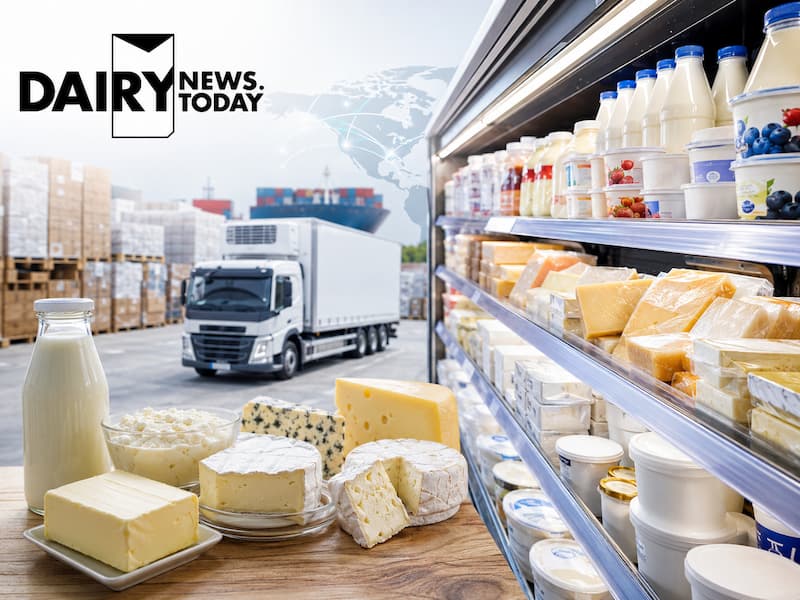
He linked the skills requirement to changes in consumer demand. Dairy fats had supported Irish milk prices and products such as Kerrygold and cheese, he said, while supermarkets were showing stronger interest in protein, products associated with GLP-1 treatments, functional foods, sports nutrition and gluten-free offerings. Mr Mulvihill said the shift represented “a huge opportunity”, while also warning that processing plants needed people able to respond to it.
Mr Mulvihill described farming and processing as mutually dependent. Farmers require processors to market milk and turn it into products, while processors rely on farmers for supply, he said. The industry’s task was to increase the value of milk so that farmers could receive returns that supported their position in the supply chain.
“We should no longer see ourselves as a dairy industry,” Mr Mulvihill said. “We should see ourselves as a dairy and nutrition industry.” He said milk produced in Ireland was used in medical products, supported patients in nursing homes and hospitals, and contributed to athletes’ nutrition, alongside conventional and affordable food products. He described the sector’s cross-functional role as significant and said he hoped its performance of the past 30 to 40 years would continue through 2035 and 2045.