Indian state targets milk output of 10 million litres daily by 2030
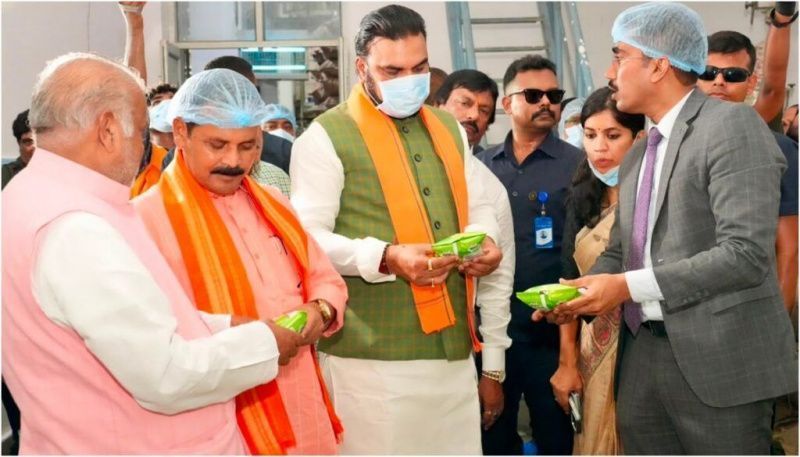
Choudhary and Rajiv Ranjan Singh, the Union minister responsible for fisheries, animal husbandry, dairying and Panchayati Raj, jointly opened the gathering at Bapu Sabhagar. Participants included central and state government representatives, dairy bodies, livestock organisations and milk producers. Choudhary described dairy farming as important to rural livelihoods, farmers’ earnings and women’s economic participation. He said Bihar sought self-sufficiency in milk and a place among India’s leading dairy-producing states, with improvements to animal husbandry and milk-collection infrastructure central to the production target.
The state is providing livestock farmers with financial support to buy quality cows and buffaloes through the Mukhyamantri Godhan Vikas Loan Scheme. The programme aims to increase milk output and broaden livelihood opportunities. Bihar is also extending the coverage of dairy cooperatives and upgrading facilities for collecting and processing milk. The Bihar State Milk Cooperative Federation, known as COMFED, received recognition at the event for the expansion of its operations. It sells dairy products under the Sudha brand. Figures from the Union dairy ministry put its daily procurement at 2.397 million kg and daily sales at 1.841 million litres.
Choudhary also outlined Sudha’s expansion into markets outside Bihar. COMFED has established a processing facility in Assam capable of handling 100,000 litres a day and plans another with the same capacity in West Bengal. The proposed and existing facilities form part of efforts to widen market access for Bihar’s milk producers. Within the state, Sudha handed over keys to sales outlets during the celebrations as part of its retail expansion. The brand also introduced Makhana Kheer and Rabri, linking regional food products with its dairy-processing and marketing activities.
Bihar plans to promote goat farming as another source of household income in rural areas. It has set a goal for Sudha to collect and market 100,000 litres of goat milk each day. The government is preparing Pashu Sakhis to advise and assist livestock owners, while seeking greater involvement by women in animal husbandry. These measures accompany its work on conventional cow- and buffalo-based dairying and its efforts to develop markets for traditional and value-added dairy foods.
Infrastructure inaugurated or dedicated at the celebrations included data-processing and milk-collection units for cooperative societies, supported by the National Programme for Dairy Development. Mineral-mixture plants were among the projects at VPMU in Patna and TIMUL in Muzaffarpur, alongside an effluent-treatment facility at the Mithila Milk Union in Samastipur. Namaste India’s processing plant at Sikandarpur, Bihta, in Patna was also dedicated. Built with support from the Animal Husbandry Infrastructure Development Fund, that facility can process 200,000 litres of milk daily.
Certificates were handed out for veterinary-medicine sales centres approved through the Livestock Health and Disease Control Programme, as part of measures to improve access to animal healthcare. The government also introduced operating procedures and a digital portal to assess and grade dairy cooperatives and milk-producer organisations. Another launch was a climate-resilience roadmap for India’s livestock and dairy industries under the Viksit Bharat 2047 framework.
Singh, also known as Lalan Singh, put India’s share of worldwide milk production at approximately one-quarter. He cited an increase in Bihar’s annual output from 7.19 million metric tonnes in 2013–14 to 13.76 million metric tonnes in 2025–26. The event also included the presentation of the 2026 National Gopal Ratna Awards, recognising work on conserving indigenous cattle and buffalo breeds, developing dairying and improving livestock productivity.