Indian governor urges institutions to offer dairy and livestock training
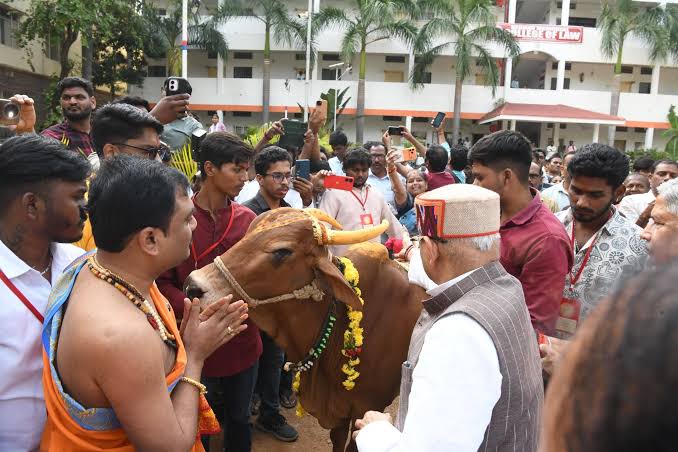
Shukla was chief guest at the State-Level Gau Vignana Pareeksha-2026 awards ceremony in Narayanaguda, Hyderabad. The Sanatana Go Sampathi Foundation and Telangana’s Goseva Department jointly organised the gathering at Sardar Patel Auditorium. Those attending included Bandi Sanjay Kumar, Union Minister of State for Home Affairs, and Ajit Prasad Mahapatra, All India Gau Seva Convenor. The programme brought together policymakers, sector representatives and students receiving awards.
The governor highlighted the contribution of cattle to village economies and the daily income of millions of farming households. He pointed to milk, curd, butter and ghee as sources of dietary protein and fat, as well as regular cash receipts for rural families. Dairy farming and the manufacture of these products support both household nutrition and income stability in villages across southern India.
Shukla also discussed the agricultural uses of cattle dung and urine, including their role in organic soil improvement and natural farming. Combining livestock rearing with crop production that requires fewer purchased inputs helps small farmers limit their dependence on synthetic fertilisers and conserve local agricultural resources. His remarks linked the management of cattle with the use of farm by-products beyond the sale and processing of milk.
Addressing the student awardees, he encouraged the application of scientific knowledge to village businesses. He outlined opportunities to combine established cattle-rearing practices with contemporary agricultural science, refrigerated supply systems and processing equipment. Education in these areas can support young graduates seeking to establish agricultural enterprises. Technical learning in schools and universities also supports herd productivity and the quality of milk supplied through regional collection systems.
India’s small mixed farms supply milk to village co-operatives and privately operated chilling facilities, relying on productive, healthy animals through seasonal changes in weather. Fodder management, veterinary services and the reuse of agricultural waste contribute to lower production costs per litre and better margins for farmers. Cattle-welfare programmes and investment in dairy infrastructure are also connected to efforts by states to increase milk procurement and maintain reliable supply networks.
Shukla urged students and community leaders to use their scientific knowledge to strengthen rural economies and improve livestock care. The address placed dairy enterprise and natural-farming education alongside efforts to increase agricultural value addition and rural self-reliance. It also emphasised the involvement of agricultural departments, educational institutions and local dairy organisations in developing livestock-based economic activity in Telangana.