Global Milk Production Faces Slowdown Amid Economic and Climatic Challenges
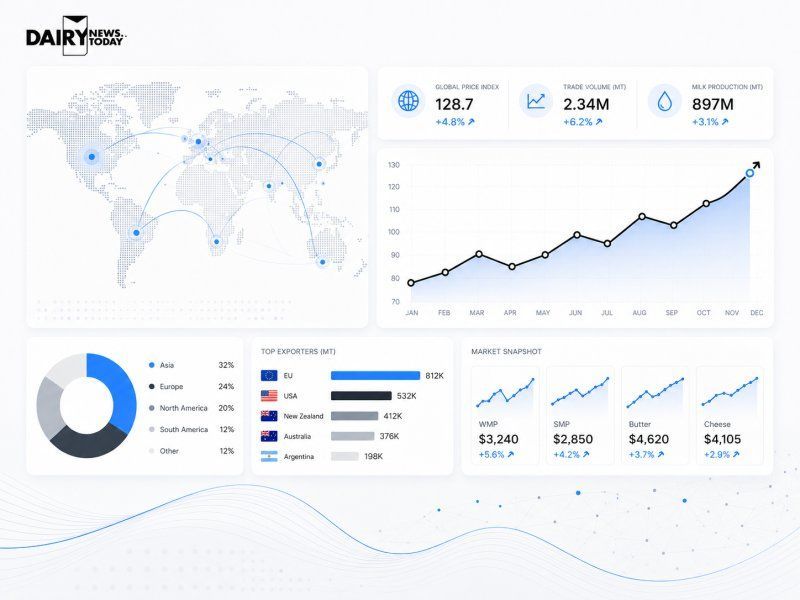
The global milk production landscape is entering a phase of moderation following a robust 2025, according to Rabobank's latest quarterly report. For 2026, the bank projects a modest growth of just 1%, a stark contrast to the 3.1% increase seen the previous year. This slowdown is attributed to several economic and climatic factors impacting key producing regions.
Rabobank notes that the deceleration in production began during the second quarter of 2026, with forecasts suggesting a growth of 1.5% in that quarter, followed by stability in the third quarter and a contraction of 1.6% in the fourth quarter. This projected decline marks the first such occurrence since 2024.
A primary concern for Rabobank is the profitability of dairy producers rather than demand. The report highlights the pressures from falling milk prices coupled with rising costs in energy, fertilizers, animal feed, transportation, and financing, which are squeezing margins globally.
On international markets, skimmed milk powder is leading price recoveries, while whole milk powder also shows positive trends. In contrast, cheese prices are highly volatile, and butter prices remain below 2025 levels due to ample supply.
Among major producing regions, the United States continues to expand its production, whereas Europe is showing signs of stabilization. China is on a path to gradually recovering its consumption levels, while New Zealand faces a challenging season following an exceptional year.
South America emerges as a region with significant uncertainties. Rabobank predicts a slowdown in production in the latter half of the year, driven by tighter margins and the increasing likelihood of an El Niño event, which could cause flooding in key production areas. Argentina, despite seven consecutive quarters of growth, is experiencing more moderate expansion.
Additional factors identified in the report include the Middle East crisis affecting energy costs, global consumption trends, and the growth of protein-rich foods driven by GLP-1 medications.