Global Dairy Market Faces Slowdown Amid Rising Costs and Weather Risks
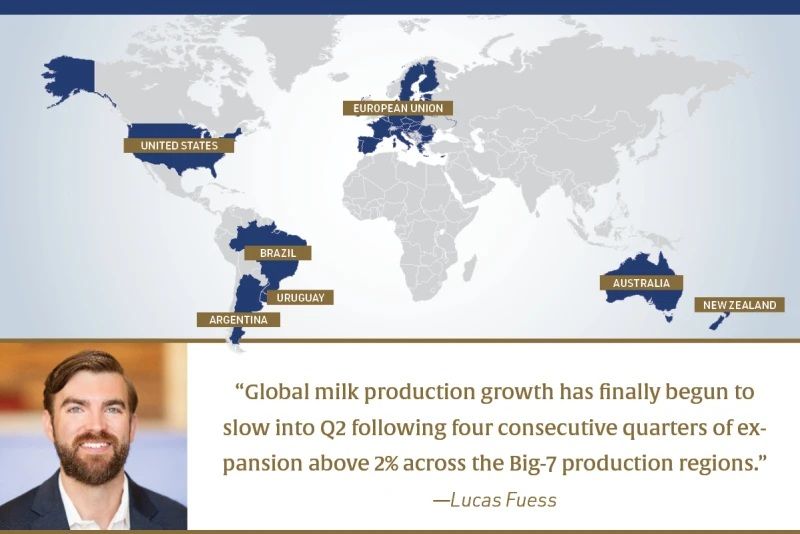
Rabobank's recent report sheds light on a significant deceleration in global milk production. The growth rate is expected to slow to just 1% in 2026, influenced by increasing farm costs and the adverse effects of the El Niño climate pattern. This marks a stark contrast to the previous years of rapid growth that characterized the global dairy supply chain.
During the final quarter of 2025, global milk production experienced a peak year-on-year increase of 5.2%, one of the most substantial rises on record. However, the outlook for 2026 shows a sharp decline in momentum, with projections for 2027 indicating a possible contraction of 0.2% in production volumes. This shift is seen as a movement towards a structural equilibrium in the international dairy market.
In contrast, the United States has maintained robust growth, with a 2.7% increase in dairy output year-on-year as of April. This growth is supported by favorable milk-over-feed margins and a national herd expansion, reaching 9.645 million head, a number not seen since the 1990s. The U.S. dairy sector is capitalizing on increased component levels and crossbreeding strategies, resulting in record cheese and butter production, alongside a 10.6% rise in first-quarter exports.
Meanwhile, other major dairy-producing regions face challenges. The European Union's milk production has plateaued due to reduced farmgate returns, while South America contends with weather disruptions from a strong El Niño pattern. Oceania also faces limitations, with New Zealand adjusting from peak production levels and Australia grappling with constrained farmgate margins.
Industry discussions are increasingly centered around managing farm-level costs, addressing issues such as elevated energy tariffs, fertilizer prices, and interest rates. These challenges are compounded by geopolitical uncertainties, particularly those related to the Strait of Hormuz. Despite these pressures, the demand for protein-rich dairy products, such as specialized whey protein and cheese, remains a stabilizing force in global trade.