FrieslandCampina’s Biomethane Tankers Offer Irish Co-ops a Circular Model
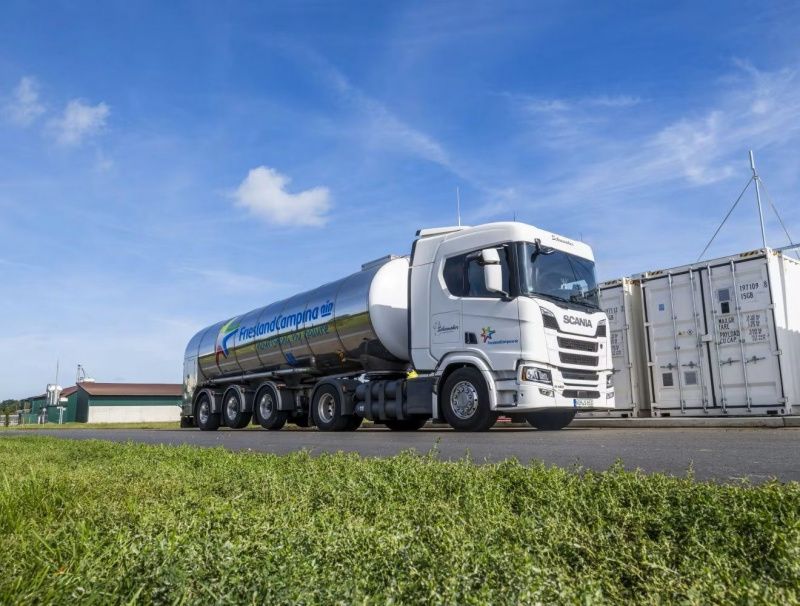
FrieslandCampina plans to move about half of its milk-collection trucks to compressed biomethane, or bio-CNG, across three European countries. The fuel is produced from bovine manure through anaerobic digestion. At the Barver Landmilch dairy farm in Lower Saxony, Germany, the operation includes on-site bio-CNG production and a dedicated refuelling station, allowing collection tankers to replenish fuel where milk is loaded.
Milk tankers operate on rural routes with gross vehicle weights of up to 44 tonnes and also power pumping, measurement and agitation equipment. Bio-CNG trucks are described as offering torque, range and turnaround times comparable with diesel vehicles. Battery-electric vehicles face payload and charging limitations on some long rural collection routes, according to the account.
Anaerobic digestion processes slurry into biomethane while capturing methane that could otherwise be released during storage in open lagoons. In the described logistics loop, fuel made from farm waste is used on regular milk-collection journeys. The arrangement links manure handling with the operation of heavy transport vehicles.
Ireland is developing infrastructure relevant to such a system. Gas Networks Ireland commissioned a €32m grid-injection facility at Mitchelstown in County Cork, in the Munster dairy region. The site can receive upgraded biomethane made from agricultural slurry and agri-food waste and is described as the first centralised injection hub of its scale in Europe.
Gas Networks Ireland’s GRAZE programme has begun issuing grants to help commercial fleet operators and contract hauliers convert as many as 75 heavy vehicles from diesel to bio-CNG. Separately, Ireland’s Department of Climate, Energy and the Environment opened an expression-of-interest process for a proposed €200m Biomethane Capital Grant Scheme. The scheme is intended to support the construction of large anaerobic-digestion facilities across the country.
Irish dairy processors including Tirlán, Dairygold, Kerry Dairy Ireland, Lakeland Dairies and Aurivo operate tanker fleets that collect billions of litres of milk each year from thousands of family farms. Using biomethane in those logistics contracts could provide emissions data for corporate customers and supermarket groups seeking lower-carbon dairy ingredients. The model also connects with the European Union’s Corporate Sustainability Due Diligence Directive and Corporate Sustainability Reporting Directive, under which the account identifies raw-milk transport as part of companies’ Scope 3 reporting obligations.
At farm level, anaerobic-digestion hubs could take surplus slurry and return digestate with more stable nutrients and less odour. The digestate can be used as an organic substitute for synthetic fertiliser. The arrangement is relevant as reviews of the EU Nitrates Directive and Irish water-quality rules affect stocking rates and permitted organic-nitrogen use. The source describes manure processing as both a waste-management service and a potential source of farm revenue.