Dairy Industry Ireland Welcomed Ireland’s Budget 2027 Measures
Dairy Industry Ireland said the Budget included measures relevant to processing companies, including changes affecting certain research and development work and subcontracted research expenditure. The association also referred to tax and enterprise-policy provisions and to measures that could affect operating costs in manufacturing. Its statement represented an assessment by an industry stakeholder rather than independent evidence that the measures would deliver the outcomes sought.
The €21.6 million allocation cited by the association is intended for European Innovation Partnerships focused on water quality and biodiversity. It is not a direct grant for dairy-processing plants. Dairy Industry Ireland also highlighted the Farming for Water initiative, which it said involved almost 6,000 farmers and had received more applications than available places. Those figures describe participation reported by the association and do not measure changes in water quality.
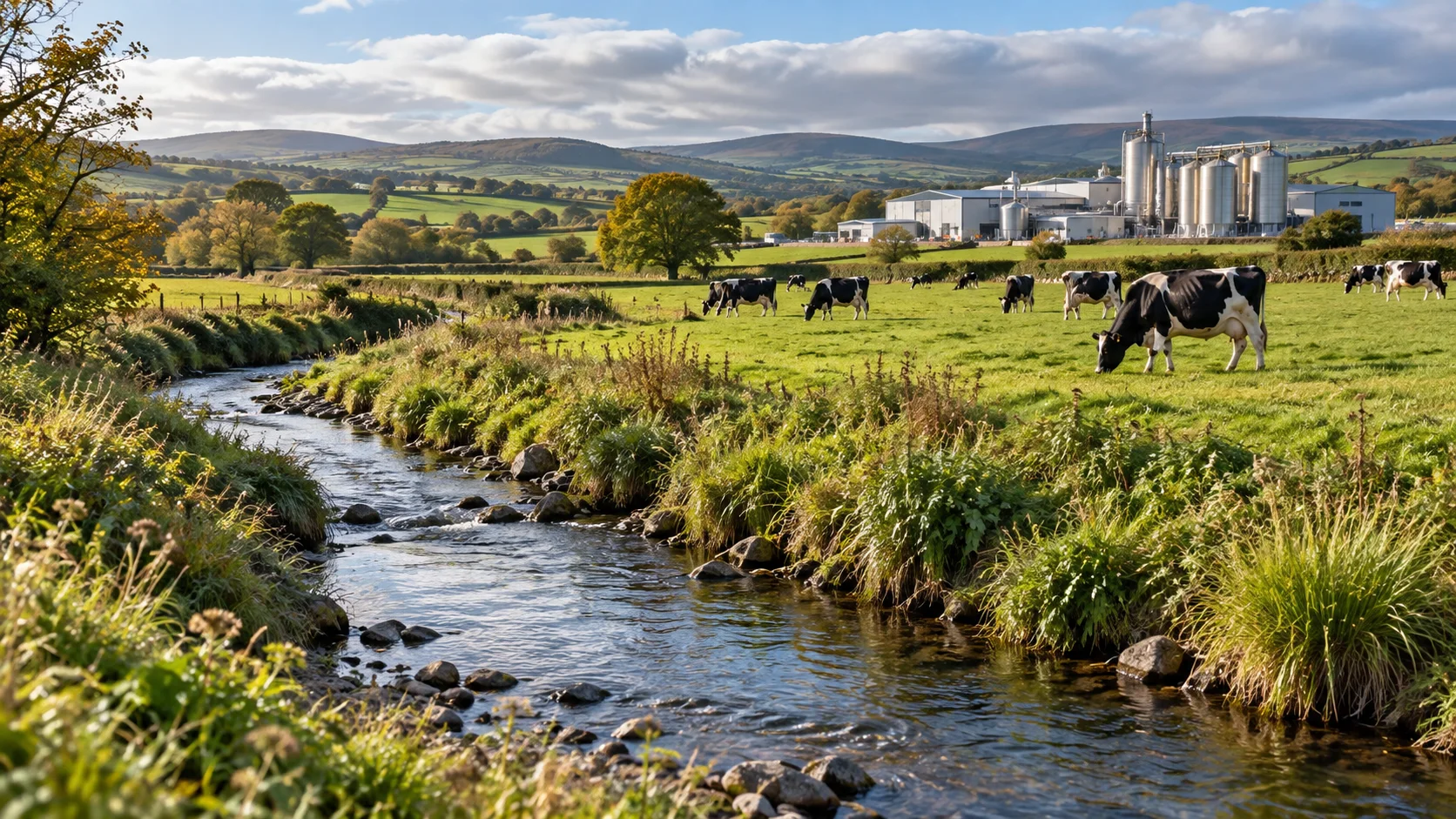
The dairy supply chain includes farms, processing facilities, cold storage, ingredients production and export markets. Environmental responsibilities arise at different stages. Nutrient losses and agricultural water quality are mainly connected with land management, while processors manage matters including energy use, water consumption, cleaning systems, wastewater and production efficiency. Farm-level decisions can affect the environmental profile of products sold by processors, but the measures and responsibilities at each stage are distinct.
The changes concerning research incentives could apply to businesses developing nutrition products, improving processes or commissioning specialist scientific work. Advanced food-processing research can cover formulation, shelf-life, analytical testing, process efficiency and the use of new equipment. Companies may work with laboratories, pilot plants or research organisations. Eligibility under the statutory rules and the amount of qualifying expenditure will determine how individual businesses are affected; the association’s support for the measures does not establish that all dairy or nutrition companies will benefit equally.
Energy costs are significant for activities such as dairy drying and thermal processing, which can require both heat and electricity. Hygiene requirements and product specifications restrict the ways in which some processes can be altered. The effect of energy-related tax or cost measures will vary according to a facility’s fuel mix, efficiency and output. Labour, logistics, demand, milk availability and capital costs also form part of the operating conditions for processors.
Environmental performance is increasingly reported across the wider supply chain as well as at the plant. Processors may seek comparable information from farm suppliers while reporting their own operational results. The relevant timeframes differ: a plant investment may change energy use relatively quickly, whereas water quality in a catchment can respond more gradually and can be influenced by rainfall, land use and other policies. Continued implementation of the Budget measures will require official guidance on eligibility, while environmental claims require baselines, defined targets and monitoring that distinguishes participation or expenditure from measured results.