Dairy cows can produce milk beyond 12 months without another pregnancy
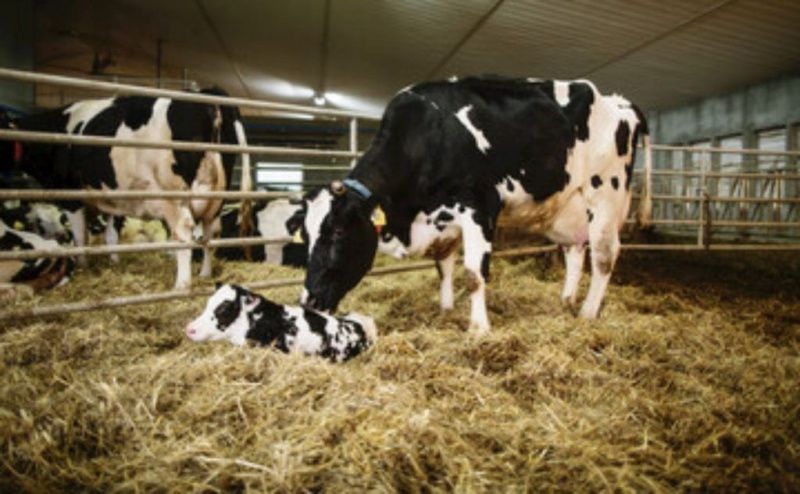
Natural lactation usually begins after pregnancy and calving. Hormonal changes during gestation develop the mammary gland; after birth, changes in hormone levels, including the action of prolactin, initiate abundant milk secretion. Regular milk removal through milking or suckling helps sustain output, which can continue for more than a year without another conception. Production normally rises to a peak before declining, at a rate influenced by genetics, feeding, health and management. Hormonal induction is also possible in particular circumstances, including in females without a recent calving, and requires veterinary supervision. Conventional dairy management uses roughly 305 milking days followed by about 60 dry days, with conception during the early months after calving supporting another birth approximately a year later. Embrapa uses this schedule in its technical guidance; the associated expectation is that about 84% of cows are lactating, depending also on herd fertility and production persistence.
A Brazilian investigation of Holstein and Jersey lactation curves compared durations of 305, 365 and 435 days. Longer lactations showed greater production persistence, particularly in certain animal categories. Cumulative milk yield increased with duration, while average daily output fell. A separate meta-analysis by University of Guelph researchers, published in the Journal of Dairy Science in September 2026, combined 21 studies of milk production and reproduction under extended-lactation management. Among cows following their first calving, each additional ten days between births was statistically associated with an average increase of 0.08kg in energy-corrected milk per day of the calving interval. Results for cows with multiple previous calvings depended more heavily on animal selection. Delaying the first insemination was also associated with improved fertility measures, including a higher likelihood of conception at the first service and fewer inseminations per pregnancy. The authors recommended selecting cows individually for extended lactation.
A 2024 review in Reproduction in Domestic Animals, involving researchers affiliated with Wageningen University in the Netherlands and the Swedish University of Agricultural Sciences, identified potential reductions in the frequency of transition periods and their associated health risks. Around calving, cows undergo substantial nutritional, metabolic and hormonal changes. Associated disorders include ketosis, hypocalcaemia, retained placenta and metritis, which can impair production, fertility and health. Fewer calvings could reduce the frequency of reproductive and health interventions, as well as work connected with newborn calves. The article identifies these possible labour savings as relevant to farms struggling to recruit and retain skilled employees. Later insemination can also take place after cows have passed some of the metabolic demands of early lactation.
Economic assessment involves milk revenue, ongoing expenditure and the opportunity cost of postponing the next high-output early lactation. The article illustrates this with a cow still yielding 20 litres daily after 305 milking days: at an assumed price of R$2.30 per litre, gross receipts would be R$46 a day, or about R$1,380 over 30 days. At ten litres daily, the corresponding monthly receipts would fall to approximately R$690. These hypothetical calculations require comparison with feed, labour, veterinary and other costs. Longer intervals between births also reduce calf numbers over a given period, affecting replacement-heifer programmes and income from animal sales. Farms relying on those activities must incorporate the change into their financial assessment.
Selection for extended lactation involves average output, body condition, feed intake, udder health and future reproductive potential. Cows producing the same initial volume—for example, 35 litres daily—can have markedly different yields ten or twelve months later because their production declines at different rates. Animals with persistent output are more favourable candidates; low yield, recurring illness or excessive body-condition gain can undermine the benefits. As milk production drops, an energy-rich ration can channel more nutrients into weight gain. Excessive body reserves near the end of lactation can impair metabolism and increase health risks at the following calving. Feeding therefore needs to follow changes in yield, physiological status and nutritional requirements. Maintaining lactation for 14 or 15 months is physiologically possible for some cows, with the financial outcome depending on their continuing output and costs.
Planning the next pregnancy also requires provision for a dry period before calving. This break supports recovery and functional renewal of mammary tissue ahead of the next lactation. Around 60 days remains a widely used reference, with adjustments possible under technical guidance. Brazil’s production systems range from family farms keeping crossbred cattle on pasture to intensive operations using high-yielding cows and controlled feeding. Seasonal forage shortages can make prolonged lactation economically unfavourable when they coincide with declining milk output. Herds with reliable feeding, individual monitoring and selection for production persistence operate under different conditions. Gir Leiteiro, Girolando, Holstein and Jersey cattle can have different lactation curves, while individual performance remains important to selection.
Genetic improvement, precision feeding and monitoring systems allow increasingly detailed tracking of individual animals. The management approach described in the research uses daily milk yield, lactation persistence, body condition, disease history and reproductive performance to guide breeding schedules. Further research questions include profitability across different production systems, environmental effects and consequences over cows’ productive lifetimes.