Cheese holes can be harmless or signal contamination
Holes in cheese do not have a single origin. According to Renata Dinnies Santos Salem, a professor in the Department of Food Engineering at the State University of Ponta Grossa, they generally arise through three different processes, only one of which is associated with a health risk.
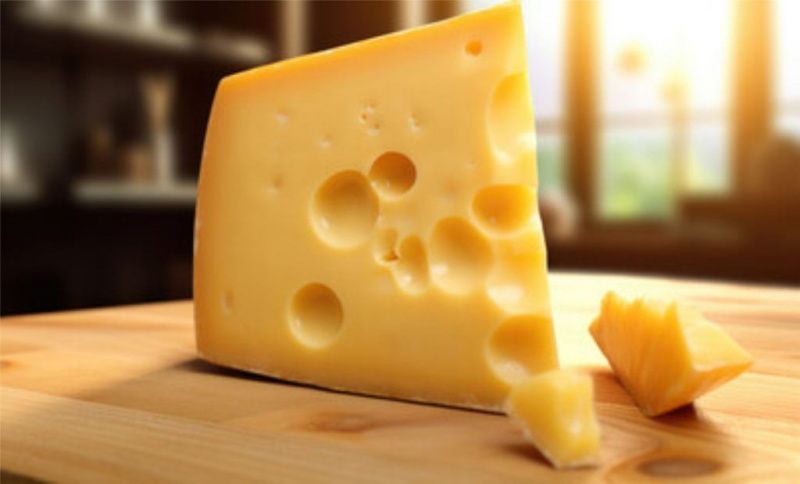
In matured cheeses such as Emmental, Gouda and Maasdam, the openings are known as eyes. Propionic bacteria generate carbon dioxide during production and maturation, and the gas forms rounded cavities that are relatively even and spread through the body of the cheese. This pattern is an expected feature of those products and is not linked to contamination.
A second type is created during moulding. Small pockets of air can remain trapped in the curd, producing mechanical openings. These are usually flatter, fewer in number and arranged differently from the cavities formed during maturation. Salem says this type also does not pose a health risk.
The situation is different when the cheese is fresh or artisanal, particularly when it has been made with raw milk. Small, uneven holes that resemble cracks may indicate contamination by faecal coliforms. The professor associates this possibility with shortcomings in hygiene during production.
Consumers can also examine the rest of the product. An unusual smell, an excessively soft consistency or a texture resembling a sponge may accompany the irregular openings and can indicate the growth of unwanted microorganisms within the cheese. Possible effects of eating contaminated cheese include diarrhoea, vomiting, abdominal pain and other gastrointestinal problems.
Cooking is not necessarily a solution. Some microorganisms are resistant and require sterilisation processes to be removed, so ordinary heating or cooking may not be enough to neutralise contamination.
Salem advises consumers to check for a sanitary inspection seal. The seal documents compliance with quality rules and oversight of the milk used in production. Cheese with numerous irregular holes, an unusually fluffy texture or an off-standard odour should not be eaten, she says; it should be discarded, with preference given to inspected products.