Canterbury Dairy Conversions Increase Demand for North Island Cows
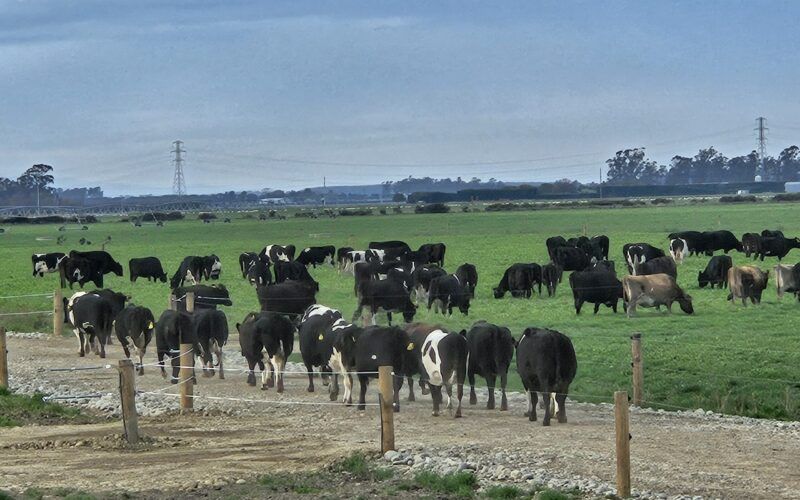
Land-use changes in Canterbury are expanding the region’s dairy capacity as returns from arable farming remain weak and milk payouts stay strong. Mixed-cropping and dairy-support businesses are being converted into dairy operations, increasing demand for cattle at a time when local supply is limited.
Livestock agents and brokers have reported unusually strong early-season interest from buyers. They are purchasing North Island in-calf heifers and mature cows for newly created South Island farms. Updates from regional councils indicate that approved or pending conversion-related consents could bring at least 25,000 additional cows into Canterbury’s milk pool over the next several seasons.
Regulatory filings identify dozens of properties undergoing conversion. Individual operating units average about 800 cows, although some purchasers are seeking herds of between 1,000 and 1,700 animals. Livestock companies said as many as ten major supply agreements had already been secured for delivery before the next winter stocking period.
The shortage has increased the cost of assembling and moving herds. Cattle procurement and transport expenses have risen by as much as $12,500 per hectare. In-calf heifers are changing hands for about $2,900 to $3,000, while adult dairy cows cost roughly $3,200 to $3,400. The latter prices are at least $200 a head above the previous season’s baseline.
New operators also face spending on milking parlours, farm tracks and effluent-management systems. Sourcing animals from the North Island adds logistical requirements because farms there tend to occupy smaller areas. Buyers often need to combine several herds from different locations to create a single group of the required size and composition.
The process involves advance planning, biosecurity checks and coordinated shipping between the islands. Competition for suitable dairy cattle is expected to continue as conversion projects proceed under development timetables extending into the latter part of the decade. Some processing-infrastructure projects are scheduled to be completed by 2029, leaving replacement-stock demand linked to those developments rather than only to short-term milk prices.