Brazilian startup Zeit presents milk analyser with 35-second results
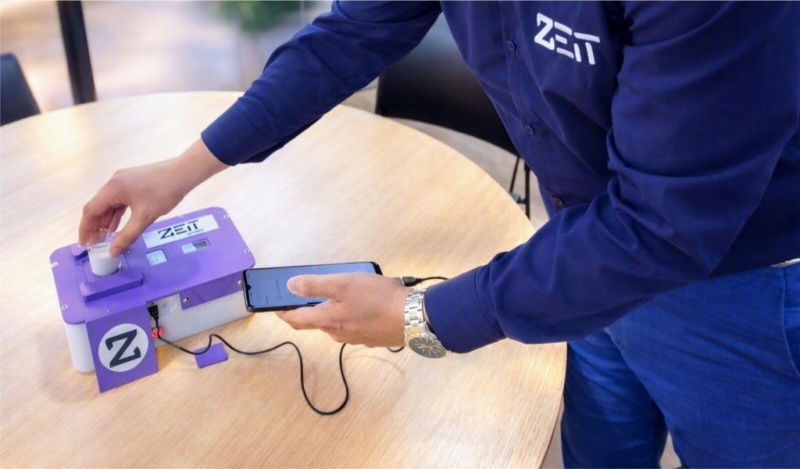
Producers and technical specialists saw the equipment at Espaço Impulso in Cascavel, Paraná, an initiative run by Coopavel with Itaipu Parquetec. The event introduced the Zeit Qualis, developed by the Rio Grande do Sul-based startup Zeit as a device intended to bring milk testing closer to the farm.
The company developed the equipment over more than three years of research. It was designed around the time gap that can arise between the collection of milk samples and the delivery of full laboratory results. The device operates through a mobile phone and does not require an internet connection for the analysis. Where a connection is available, results can also be uploaded to a digital platform to create a record of the herd over time.
Zeit Qualis measures fat, protein, lactose and total solids, as well as somatic-cell count. Testing can use milk from the farm tank, representing the combined output of the animals, or individual samples where the property has an animal-by-animal collection system. The latter option allows differences among animals in the same herd to be identified.
“We brought the laboratory to the field,” said Renan Buque Pardinho, Zeit’s co-founder and chief executive, who holds a doctorate in science. He said the intended users included farmers, technicians, nutritionists and veterinarians seeking faster and more precise information.
The company also linked milk-solids monitoring to payment systems that take quality into account. “If the producer is not producing more solids in the milk, he is losing money,” Renan said.
Zeit originated in Santa Maria, Rio Grande do Sul, from research at the Federal University of Santa Maria and was formally established in 2020. It has producers taking part in field trials, while Coopavel is involved in evaluating the technology in Paraná. The company expects to begin selling the equipment in September.
Jurandir de Mattos, Coopavel’s feed-area manager, said at the opening that Brazil’s milk consumption has room to expand and that technology can improve efficiency in the sector. He referred to countries with higher per-capita consumption and said tools that speed up decision-making could contribute to the Brazilian market’s development. The Cascavel presentation brought university-based technology to producers and professionals testing it under real production conditions.