Artisanal Mexican Cheese Gains Ground in Gourmet Markets
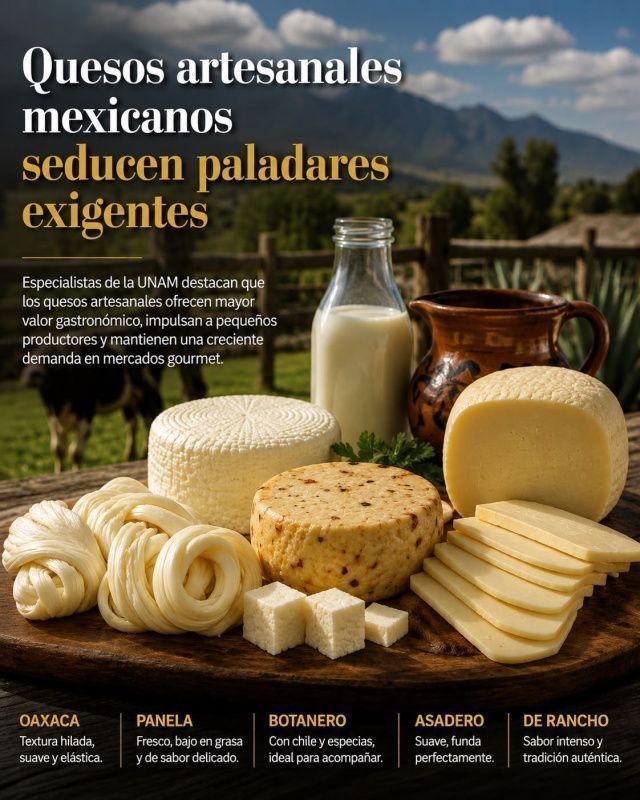
Artisanal cheese in Mexico represents 10% of the national consumption and is increasingly valued in gourmet markets due to its unique organoleptic properties, texture, and culinary identity. This sector is crucial for the country's primary production units, with 78% of these being small-scale family operations.
Pedro Flores Moreno, an academic from the Faculty of Higher Studies (FES) Aragón at UNAM, emphasized the strategic role of artisanal cheese in Mexican cuisine. These cheeses, including varieties such as panela, fresco, de rancho, botanero, Oaxaca, and asadero, are positioned against mass-produced ultraprocessed products. Transnational corporations dominate the market with reconstituted formulations made from water, milk powder, and synthetic additives designed to mimic the taste and melting properties of genuine dairy.
The transformation of raw milk into cheese significantly alters the financial outlook for small farmers. While raw milk sells for 10 to 12 pesos per liter, converting it into cheese yields 1.5 kilograms per 10 liters, which can be sold for 120 to 150 pesos per kilogram. This value addition captures higher margins, reduces reliance on intermediaries, and helps discourage rural migration.
To enhance competitiveness in regions such as Mexico, Morelos, Michoacán, Zacatecas, and Querétaro, training programs promote the adoption of technology while preserving traditional practices. The use of biotechnology, temperature sensors, and automated controls in pasteurization, coagulation, and maturation processes ensures food safety and standardizes output, securing the economic viability and continuity of the national cheesemaking legacy.
The expansion into gourmet segments is supported by diversifying into alternative milk sources, such as goat milk, new maturation formats, and the comprehensive use of whey for making ricotta. This approach aims to preserve the artisanal essence while adapting to modern market demands.