Andres Rojas turned an abandoned farm into a dairy operation
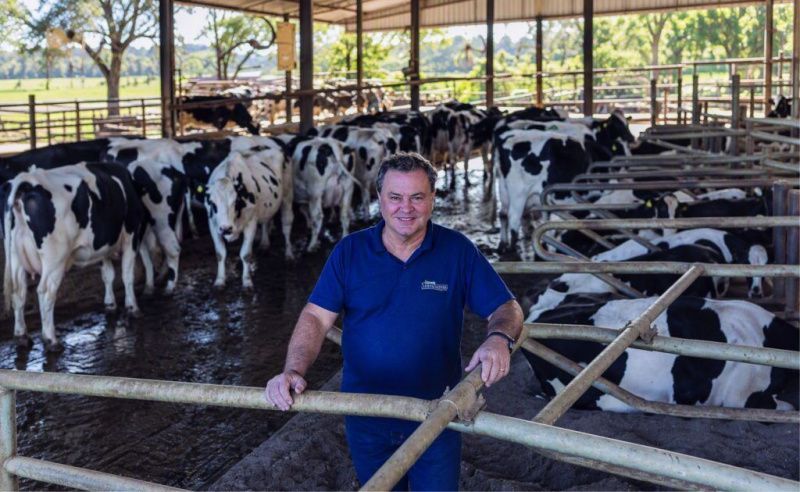
Andres Rojas purchased the abandoned property in Virginia, in southern Minas Gerais, in 2005. After a career in the corporate sector, the agronomist, whose parents were Spanish, began pursuing the goal he had set at the age of 20: owning farmland. Over the following two decades, Fazenda Sertãozinho adopted management practices focused on sustainability, genetics and output.
The farm’s 145 milking Holstein cows currently produce about 6,000 litres per day. Annual output is approximately 12,000 litres per cow, compared with a Brazilian average of 2,400 litres, according to the Brazilian Institute of Geography and Statistics. Rojas attributes the results to management decisions made within the farm. “In this activity, only those who are efficient survive. And for that, it is necessary to adopt a culture focused on several aspects of the farm’s routine,” he said.
Management at Sertãozinho uses targets, performance indicators and technology in animal handling and welfare. Assessments by ESGpec, a dairy-sector start-up, gave the farm a 100% result in good practices across areas including animal care, product safety and quality, greenhouse-gas mitigation and rural economics. Rojas said that many small and medium-sized producers focus on prices, which they cannot control, while failing to build internal efficiency.
The next stated objective is to raise daily production to 10,000 litres within two years without purchasing more cattle. The farm plans to invest in infrastructure and equipment while maintaining its performance and animal-welfare indicators. Its genetic programme uses DNA data mapped in the United States to guide precise breeding through in-vitro fertilisation and embryo transfer. Rojas said the programme is intended to improve herd health and productivity while supporting sustainable growth.
The total herd numbers 305 animals. Lactating cows are kept in a free-stall system with individual cubicles, while young stock are housed in a compost-barn system with shared organic-matter bedding. Milking is mechanised and takes place three times daily. Calf-rearing practices include environmental enrichment with toys and other objects; the farm has received awards for this work. Cows and heifers wear monitoring collars that track health, reproductive cycles, diet, movement and heat stress in real time.
Sertãozinho also uses autogenous vaccines customised for its herd. Rojas said these have reduced cases of mastitis and the use of antibiotics. The farm supplies its milk to Lactalis, which regards Sertãozinho as a regional reference. Of the property’s nearly 500 hectares, 164 are used for production: 100 hectares grow maize for silage and the remainder is pasture. Rojas said producing silage on the farm was important because feed accounts for the largest share of milk-production costs. Annual purchasing plans are used to buy inputs in advance.
A further 328 hectares are preserved, including more than 40 springs, according to Rojas. The property has installed solar-power systems, water-reuse equipment, organic-waste composting and fertigation, as well as measures to mitigate methane emissions. The farm employs 16 people, whose average tenure is six years. Rojas said staff receive regular training, while targets and responsibilities are monitored through departmental indicators. He also identified support from his wife, architect Tieko Rojas, and their daughters Isadora and Julia as part of the farm’s development.