Agroforestry Changes Dairy Economics and Expands in Minas Gerais
At one farm, whey from cheese-making is used to feed Piau pigs kept in an open area where red heirloom maize is later planted. The animals’ movement prepares the soil for direct seeding, without ploughing or harrowing. The system is designed so that each activity performs a function within the property and reduces the need for outside operations.
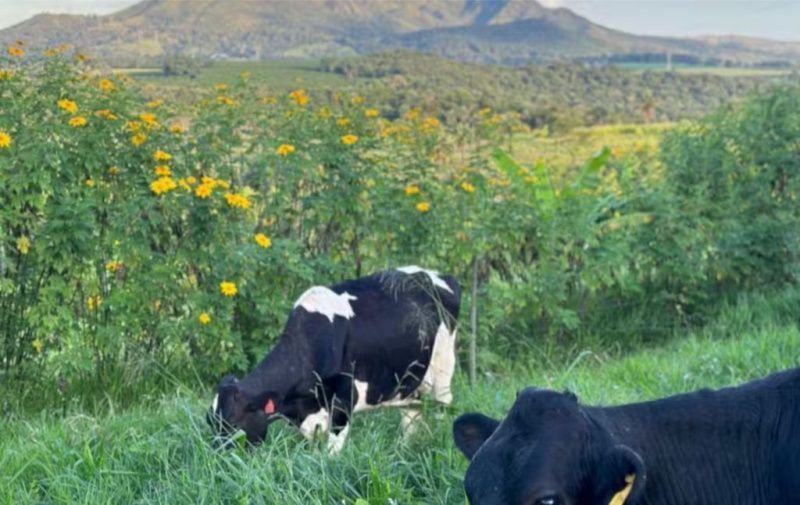
The model has also been adopted in the Krenak Indigenous Territory in Resplendor, where it combines forest restoration with milk production. Tim Krenak keeps 30 lactating cows on 16 hectares and has added trees, fruit, flowers and honey to the operation. The area could reach 45 hectares if other families in the community adopt cattle production within agroforestry systems.
Krenak reports that shade and greater environmental diversity have reduced animal stress and medicine costs. The herd continues to receive the vaccinations recommended by the Minas Gerais Institute of Agricultural Protection.
In Guaranésia, in southern Minas Gerais, farmer Caio Rivetti began in 2019 with three hectares of degraded pasture in a silvopastoral system. His operation now covers nine hectares, and he has shifted to an agroforestry model over the past three years. The farm records productivity of 15,000 litres of milk per hectare.
Rivetti says cash generation is more stable than in intensive systems using confined animals. His production cost is below 2 Brazilian reais per litre, compared with an average above 2.60 reais in the state. He also attributes savings to nutrient cycling, which reduces spending on chemical fertilisers, and says the system can pass through difficult periods with fewer external inputs.
Embrapa Gado de Leite in Juiz de Fora has studied the model since last year, including the combination of milk and honey production. Researcher Fernanda Samarini said the project will measure and monitor the ecosystem services provided by agroforestry over the long term. Three learning units are expected to be installed this year in rural settlements in Minas Gerais to assess how the model can be expanded amid a decline in the number of dairy farmers. Minas Gerais accounts for about a quarter of Brazil’s milk production.