Dairy Farmers Encouraged to Optimize Heifer Rearing Costs Effectively
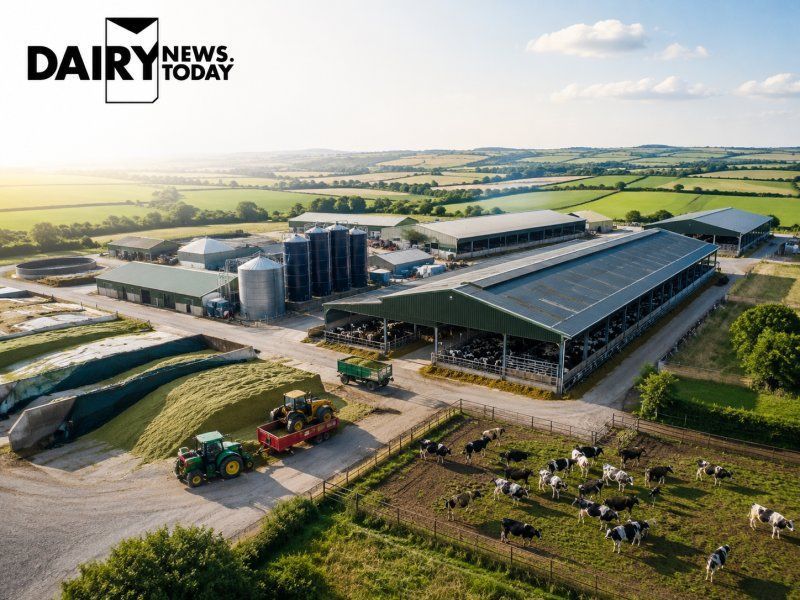
Dairy farmers are facing increasing input costs, prompting experts to suggest more efficient management of heifer rearing expenses. Heifer rearing is one of the most significant investments on a dairy farm, with costs reaching an average of £1,975 per head by 24 months in 2024, according to Professor James Drackley from the University of Illinois.
Speaking at a masterclass hosted by Mole Valley Feed Solutions, Professor Drackley emphasized the importance of improving efficiency without compromising future performance. Feed accounts for approximately 54% of total rearing costs, highlighting the need for ration efficiency. Drackley advised against overfeeding protein, minerals, and vitamins and recommended monitoring heifer size, age, and weight to adjust rations accordingly.
Over-conditioning should be avoided, as excess fat can affect health, fertility, and milk yield. Instead, focus should be on skeletal growth and frame development. Drackley suggested strategies such as reducing replacement numbers through genomic selection, increasing productivity per cow, and lowering the age at first calving to 22 months.
He also advised using low-cost rations based on forage analysis to meet nutritional needs and dividing rations into four key growth stages to align nutrient supply with physiological demands. The importance of good ventilation and adequate feed and water space was also stressed.
In early stages, a crude protein level of about 17% is recommended, with close monitoring of body condition score, targeting an average of 2.75. After six months, the dietary protein can be reduced to about 14.5%, with the addition of slow-release urea, as the rumen provides most of the protein needs.
Research presented by Drackley showed that a higher level of rumen undegradable protein (RUP) can improve growth and future performance. Higher RUP increased body weight, hip height, and feed efficiency, leading to an energy-corrected milk yield of 40.2 kg/day compared to 38.7 kg/day with a standard diet.
Dr Robin Hawkey, a senior nutritionist at Mole Valley Feed Solutions, noted that optimising protein supply can enhance growth and milk performance, considering not only the DUP level but also the MP:ME ratio.