Japanese Engineers Convert Manure into Organic Fertilizer
Japanese company Kohshin Engineering has been developing agricultural and organic waste processing equipment for over 50 years. Founded in 1970 by Eiichi Sumiya, the company has been working on manure processing technologies since 1973. Today, its equipment is used in 43 countries.
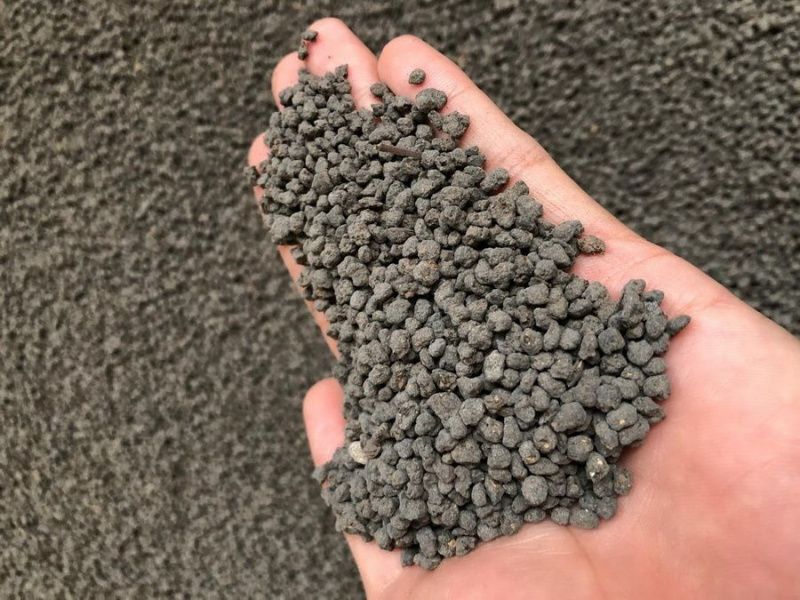
The production line is based on industrial composters for livestock and poultry farms. They utilize an aerobic process: microorganisms break down organic matter in the presence of oxygen, releasing heat. During the processing, nitrogen, phosphorus, and potassium become more accessible to plants; simultaneously, the organic matter stabilizes and odor reduces.
The CEO of Kohshin Engineering, Kazunori Sumiya, stated that simple drying of droppings does not provide plants with full access to the nutrients contained in them. According to him, composting bacteria break down complex compounds, including cellulose and lignin, and nitrogen is converted into nitrate form.
The proposed equipment has a capacity ranging from 4.4 to 70 tons of manure per day. Although the operation of the installations is automated, the operator must monitor the moisture content of the raw material and oxygen supply. After 30–40 days of processing, the fertilizer is ready for use; additional maturation can improve its quality. The company notes that the technology is suitable for various types of organic waste, including municipal, considering the characteristics of the incoming raw materials.
Sumiya reported that the cost of processed manure is five to ten times higher than that of dried manure. In Japan, the fertilizer sells for 40–50 dollars per ton, in Latin America and Southeast Asia for 100–150 dollars, and in Europe, its price exceeds 200 dollars. According to the company, equipment payback in Japan takes eight to ten years, while in Europe, it ranges from two to four years. Profitability, according to Kohshin Engineering, begins with the processing of 20 tons of manure per day; at 40 tons, the return on investment is faster.
In 2026, Kohshin Engineering will complete its own organic fertilizer production project, using the company's equipment. In addition, it is developing robotic systems for cleaning cages, washing transport containers, and processing equipment at poultry farms. The Venus 2.0 robot is designed to clean cage structures up to four meters high, can operate autonomously, and be controlled via a mobile application.
The company collaborates with Nagoya University and provides manure and droppings processing projects for carbon credit programs. Kohshin Engineering's headquarters are located in Aichi Prefecture, Japan, where two manufacturing facilities are situated: one produces components, and the other handles final assembly. In 2024, the company founded Kohshin International to develop and service Asian markets.