Wearable Technology Helps Manage an 1,850-Cow Dairy Farm
Sian Meijer and Rick Wobben operate the dairy business at West Eyreton with Rick’s parents, Roel and Diana Wobben. The farm was converted from a deer operation in 2000 and is run as one unit, although its 1,850 cows are milked in two sheds on adjoining properties. Meijer and Wobben are contract milkers and are in their fifth season on the farm.
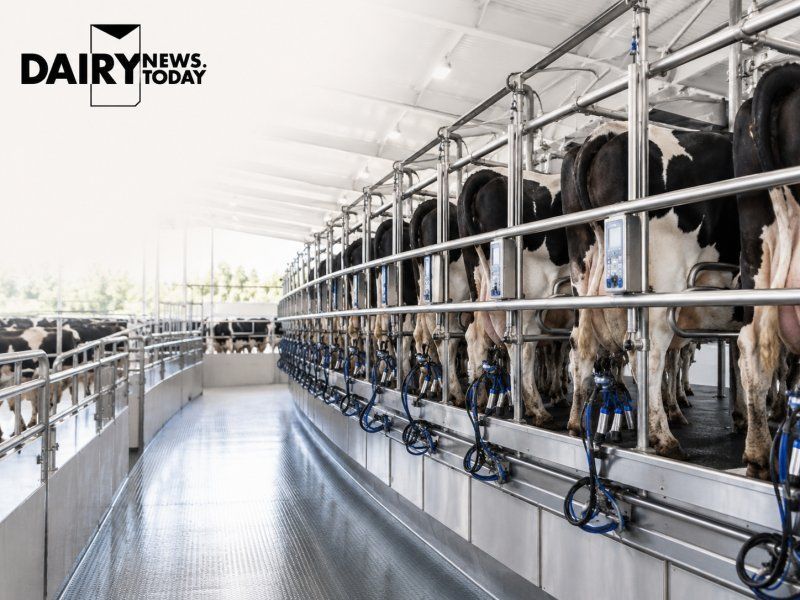
The larger shed handles as many as 1,200 cows at peak production. It has an 80-bail rotary equipped with GEA automatic cup removers, Protrack and Afimilk systems. The smaller shed contains a 60-bail rotary and a feed-pad system using the same technology. It houses the younger and lighter animals.
About 450 to 500 heifers calve in the smaller shed during spring. Depending on the season, the total there rises to between 600 and 650 cows. The farm uses split calving: approximately 1,550 cows calve in spring, while 250 to 300 calve in autumn. Autumn-calving cows are milked through winter. Carryover empty cows and selected culls remain in the production system until August 1, when the herd moves from the smaller shed to the larger one.
The AfiCollars were added two seasons ago. Meijer said the collars provide another management tool for the operation. “We’re always looking for ways to improve,” she said. “The collars have become another tool that helps us take the farm to the next level.” The farmers use the technology alongside existing records and systems in managing the herd and making routine decisions.
Staffing is divided between the two sheds. Five full-time employees work at the larger shed and three at the smaller one. A further three or four full-time fixed-term workers join during the busiest periods of the season.
The predominantly Holstein Friesian herd produced 986,000 kilograms of milksolids in the previous season. The farmers are targeting 1m kilograms of milksolids this season, a goal that Wobben had discussed with his parents when the family began operating the property. Meijer said the business had reached successive production records and was approaching that target.
Breeding decisions focus on functional Holstein Friesian cows suited to the farm’s system. Meijer described the preferred animal as moderate in size, with strong milk production, a large capacity for feed conversion, sound udders and good fertility. About 95% of the herd is straight Holstein Friesian. Red genetics are becoming more common, with roughly 20% of the cows carrying a red factor. The family reviews records of Holstein Friesian sires and assesses the type and functionality of their offspring when selecting animals.