Veracruz’s Queso de Hoja combines dairy tradition with wetland leaves
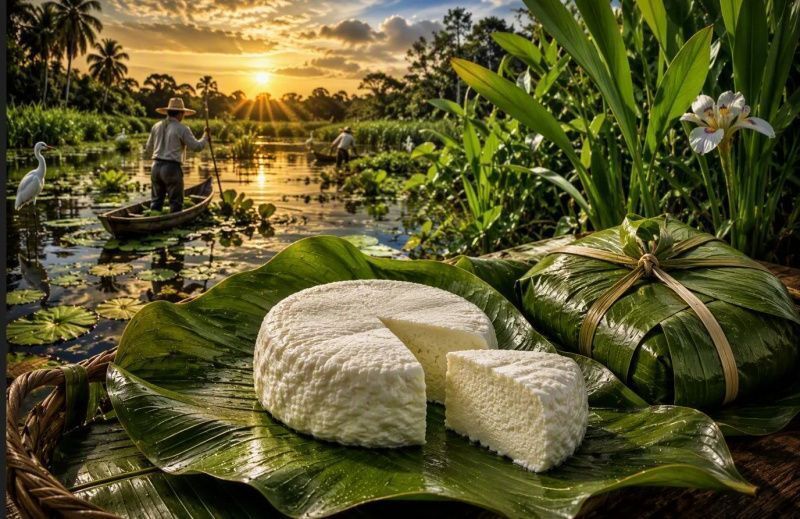
Queso de hoja is a traditional dairy product associated with Veracruz, especially the Sotavento region and the state’s coastal lowlands. Family workshops and small production units make it by combining fresh cheese-making with the use of wild vegetation from marshes and wetlands, including platanillo and popal leaves.
Production begins with the daily collection of whole cow’s milk from nearby barns and grazing areas. After the milk is curdled, the whey is removed by hand and the pressed cheese mass is sealed inside leaves that have been selected and disinfected in advance. The plant wrapping helps limit moisture loss and exposure to contamination in the region’s warm, humid conditions.
The leaves also affect the product’s sensory characteristics. They retain a distinctive level of humidity and impart herbal notes to the cheese. The finished product has a soft yet firm texture and moderate salinity, while retaining milk proteins, calcium and other minerals.
Its traditional formulation consists of whole milk, salt and rennet. This distinguishes it from commercial imitations described in the source as products that may contain vegetable fats and starches. Queso de hoja is presented as a fresh product whose ingredients and production route can be traced to local dairy operations.
Making and selling the cheese provides the main livelihood for hundreds of families in rural cattle-producing areas, including the municipalities of Tlalixcoyan and Alvarado and the Papaloapan basin. Continued demand from artisanal cheese makers creates a direct outlet for milk supplied by small and medium-sized farmers. The source says this farm-gate trade provides income certainty while producers face high feed and electricity costs and weather-related contingencies.
The method also links the region’s livestock economy with the biodiversity of its wetlands. Its preservation has been associated with possible agrotourism initiatives and with the creation of collective brands or geographical indications intended to protect the product’s origin. The cheese is therefore described as part of Veracruz’s gastronomic and dairy heritage, as well as a product of short local value chains.