Outbreak of Nodular Dermatitis in Irkutsk Leads to Cattle Culling and Discontent Among Residents
What is Known About the Outbreaks
The quarantine was established by the decree of the governor of the Irkutsk region on September 3, 2026. Subsequently, the boundaries of epizootic outbreaks and restrictive zones were clarified several times. Documents are published on the official legal information portal.
According to Governor Igor Kobzev on September 6, eight epizootic outbreaks and 96 infected cattle were identified in the villages of Butyrki and Koty. Veterinary posts were established in the settlements, prohibiting the export of animals, milk, slaughter products, and feed, as well as grazing and the movement of transport not involved in the elimination of outbreaks. Unplanned vaccination was scheduled in the surrounding areas, as reported by russia/1113475">Interfax.
By September 8, regional media reported 21 outbreaks in Butyrki, Koty, and Turskaya and 146 animals included in anti-epizootic measures. These data require clarification by animal species: publications mention not only cows but also sheep, goats, and pigs.
The World Organization for Animal Health indicates that nodular dermatitis affects cattle and buffaloes and does not cause disease in humans. The virus is mainly spread through blood-sucking insects, and the consequences for farms include reduced milk yields, skin damage, abortions, and reduced herd reproduction. Therefore, the disease poses significant economic damage even with relatively low animal mortality. WOAH Data.
Reports of the removal of sheep, goats, and pigs do not themselves imply that these animals have confirmed nodular dermatitis. At the time of publication, no detailed veterinary-legal basis for including other types of animals in the culling was provided in open official communications. Kommersant previously wrote about the removal of animals other than cows.
Why There is a Dispute Over Animal Culling
Authorities believe that the culling of infected livestock is necessary to protect neighboring territories. According to Igor Kobzev, delay could lead to further spread of the infection and significantly greater losses.
Current veterinary rules of the Russian Ministry of Agriculture provide for a set of measures. In an epizootic outbreak, a clinical examination, vaccination of clinically healthy cattle, isolated maintenance and treatment of sick animals, treatment against blood-sucking insects, and disinfection must be carried out. The rules allow for slaughter but do not establish automatic culling of all livestock in a settlement.
The diagnosis should be confirmed by detecting the pathogen or its genetic material using laboratory methods. Simultaneously, the rules do not require individual analysis of each cow: if there is a group containing more than ten animals, samples may be taken from ten animals. Moreover, the disease can occur without external signs and may be accompanied by virus carriage. Therefore, the healthy appearance of an animal does not rule out infection, but the decision to cull should be based on research results, the boundaries of a specific outbreak, and an approved eradication plan.
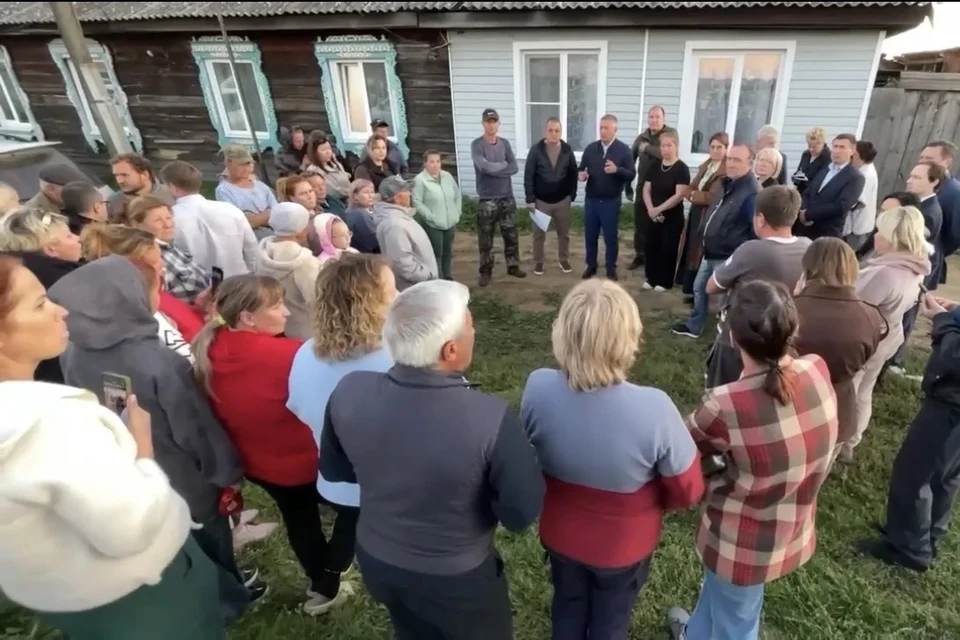
The transparency of these grounds became one of the main points of conflict. Farm owners demand laboratory reports, culling acts, and documents determining the list of animals to be culled. "7×7" reported on such demands by residents. A public response clarifying each of these points is not yet available in the reviewed open sources.
Compensation and Social Impact
According to information distributed on September 8, citing the governor, cattle owners are expected to receive 304 rubles per kilogram of live weight. Of this amount, 224.6 rubles should be provided by the regional budget, and the remaining part by the Irkutsk municipal district. Thus, compensation for a cow weighing 450 kilograms will amount to 136,800 rubles.
For pigs, a payment of 250 rubles per kilogram, including regional and municipal parts, is declared. For sheep and goats, a regional rate of 308 rubles per kilogram and additional municipal funding are named. In addition, each family in the emergency zone is promised 15,000 rubles. Authorities plan to start payments within a week. These conditions are provided by "Komsomolskaya Pravda — Irkutsk".
Russian rules for the removal of animals during the eradication of particularly dangerous diseases provide for the preparation of an act, which forms the basis for compensation. The corresponding order is established by Russian Government Resolution No. 310.
However, for the owner of a dairy farm, the consequences are not limited to the cost of the cow in live weight. The family simultaneously loses milk for personal consumption and sale, future calves, and investments in raising and feeding the animal. The published compensation scheme does not yet explain whether the loss of future income, productivity, and breeding value of individual animals is taken into account.
The social significance of the situation is also recognized by the authorities. Igor Kobzev described the events as a tragedy for families for whom livestock is a breadwinner. In rural areas, restoring a farmstead will require not only the purchase of new animals but also time for quarantine, raising young animals, and returning milk production to its previous level.
Dispute Over the Location of Cattle Culling
Another reason for protest was the choice of site for culling animals. Residents claimed that initially, the work was planned to be carried out near Butyrki, and then in the area of the Sarafanka River, which raised concerns about soil and groundwater conditions. These claims by residents were not supported by published environmental conclusions.
After public objections, authorities chose another site about three kilometers from Butyrki. It is reported that the site was chosen considering the direction of smoke, and specialists from Irkutsk State Agrarian University plan to be involved in subsequent reclamation. The parameters of the site and documents on its compliance with veterinary and environmental requirements have not yet been detailed in open sources.
The Cause of the Virus Introduction is Not Yet Publicly Established
The head of the Irkutsk municipal district, Leonid Frolov, named the illegal import of small ruminants as the presumed cause of the infection spread. However, the results of the epizootic investigation confirming this version have not been publicly presented. Therefore, it cannot yet be considered an established source of the outbreak.
For the Irkutsk region, this is not the first case of the disease. In February 2024, the official portal of the Irkutsk district reported outbreaks of nodular dermatitis, including on a farm in the village of Lylovshchina. At that time, infected animals were isolated, and vaccination was carried out within a 30-kilometer radius. Irkutsk District Administration Report.
From an epizootic point of view, restricting movement, vaccination, and rapid localization of outbreaks are necessary. But social tension increases when owners do not receive a clear written explanation of why a specific animal is being removed, on what document the decision is based, and how compensation is calculated.
To reduce conflict, the regular publication of verified data is needed: the number of outbreaks and animals by species, the results of laboratory diagnostics, the legal grounds for removal, the procedure for assessing damage, and documents on the site for the disposal of biological waste. Currently, some of this information is only coming through official statements and media reports, leaving room for distrust and rumors.
Data is accurate as of September 8, 2026. The situation and the number of identified outbreaks may change as farms are surveyed.