Couple saves historic Minnesota dairy barn from collapse
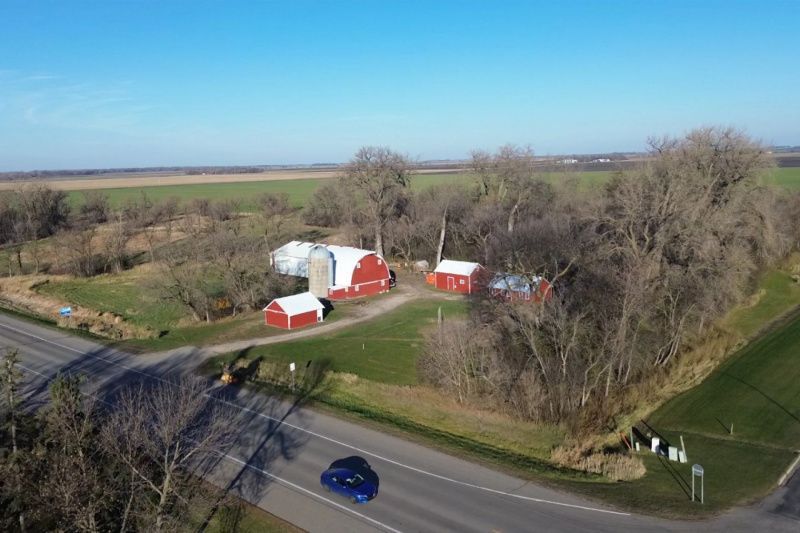
Cassie Visser had spent more than fifteen years imagining the restoration of the building, which she had passed repeatedly. She had told the previous owner she wanted to buy it and had chosen the property as the setting for her engagement photos. After purchasing it with her husband, Eric, she began a restoration spanning several years, from the ground-floor milking area to the hay storage space above.
Prolonged exposure to the elements had severely damaged the building. Work focused on stabilizing its timber structure, reinforcing the load-bearing beams and restoring the spacious hayloft. Local Amish carpenters helped with those tasks. The building is now weatherproof, and its exterior siding has regained its red color, while finishing work continues upstairs.
On the lower floor, the stanchions that held cattle in place for milking were retained. The restoration combined structural repairs with the preservation of these pieces of twentieth-century dairy equipment. The barn contains spaces used for milking during Minnesota winters and for storing hay bales harvested in summer, features typical of the region's traditional family farms.
Cassie's family history played a role in her decision to restore the property. Her grandparents had worked in a traditional barn, and her parents had also raised dairy cattle. Years earlier, her grandfather's barn had been destroyed by fire shortly after a renovation. That loss gave added personal significance to the Ada project, which involved negotiations with the previous owner and investment in repairs.
Eric also purchased an old farm windmill at auction and arranged for its relocation and installation beside the barn. The operation required two cranes to move and position the tall steel structure without damaging it. An unexpected detour through the city of St. Cloud occurred during transport. The windmill became part of the restored farm property.
The restoration comes as consolidation in the U.S. dairy industry has reduced the number of small family dairy farms. In milk-producing states such as Minnesota, automated milking parlors and large freestall barns play an increasingly prominent role in commercial milk production.