Three Córdoba Departments Account for 70% of Milk Output
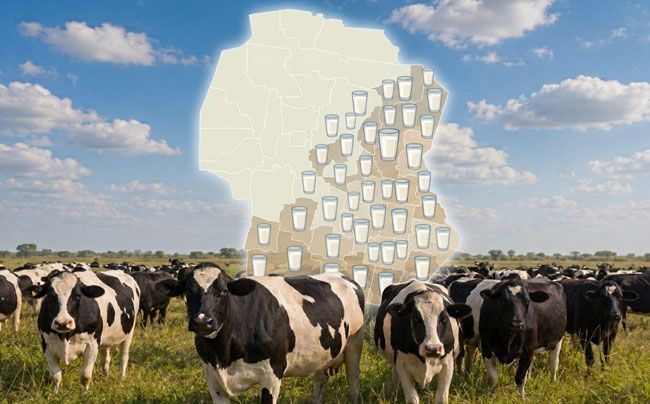
San Justo was Córdoba’s largest milk-producing department in 2025, with 1.221bn litres, or approximately 39% of the volume recorded across the 12 departments included in the dataset. General San Martín ranked second at 617.6m litres, accounting for 19.8%, while Unión produced 339.8m litres, or 10.9%.
Together, the three departments generated about 2.178bn litres. Their combined share was close to 70% of the total considered. The figures identify the centre-east and southern parts of Córdoba as the areas with the highest concentration of dairy production in the comparison.
Total output across the 12 departments rose from 2.846bn litres in 2024 to 3.124bn litres in 2025. That represents an increase of nearly 278m litres, or about 9.8%. Each department included in the comparison recorded a higher volume in 2025 than in the previous year.
The figures are available through a new dairy-production layer on Mapas Córdoba, the provincial geoportal. Users can view the volume produced in each department and compare results from different years. The platform already contains layers related to livestock and agricultural production.
According to official information, the map is intended to support analysis by producers, processing companies and public agencies. The stated uses include decisions concerning infrastructure, technical assistance and planning within the dairy chain.
The production map can also be viewed alongside the platform’s map of dairy cattle producers and stock. That resource, updated this year with 2025 information, shows the location of animals used for milk production, while the new layer records the volume generated in each territory. The stock map also shows a strong presence of dairy cattle activity in eastern and southern Córdoba. Both maps are openly available through the provincial geoportal.