The Good Cow sells raw milk through farm-gate vending
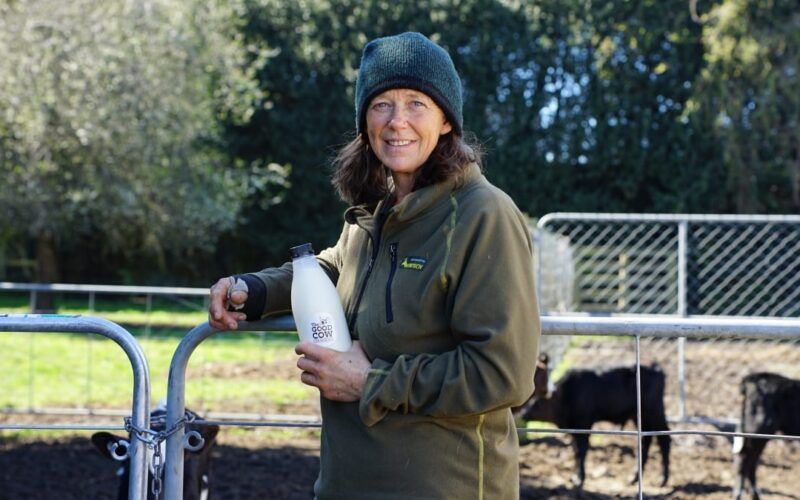
Run by producer Tammy Acton-Adams near Sefton and the Ashley River in North Canterbury, The Good Cow operates a dedicated unpasteurised-milk business. Its vending station is available throughout the day and allows customers to fill reusable glass or plastic containers. The retail price is NZ$3.50 a litre, and the milk is sold as unhomogenised whole milk.
The farm uses two routes to market. Its 35-cow herd, mainly pedigree Friesians, is kept on an 11-hectare platform and produces milk averaging 4.8% fat. Milk intended for the vending operation is cooled and transferred to small holding vats, while output not sold through the station is collected and processed by Fonterra. The arrangement combines direct retail sales with a separate outlet for larger volumes.
Selling raw milk requires compliance with rules administered by New Zealand’s Ministry for Primary Industries. The requirements include biosecurity controls, hygiene procedures and regular microbiological testing. The farm tests its milk every ten days for pathogens including Escherichia coli, as well as for somatic-cell levels.
For milk to be cleared for retail sale, the somatic-cell count must be below 160,000 cells per millilitre. Milk cannot be sold if the count exceeds 320,000 cells per millilitre. The herd’s count is reported to remain at about 60,000, supported by milking hygiene and selective breeding.
The milking shed was built for the small-scale operation and has nine stalls in a herringbone layout. It stands close to the customer kiosk, reducing the distance over which milk must be moved. The vending equipment accepts cards, cash and prepaid tokens, removing the need for a permanent retail employee. This leaves the operator to manage the herd, pasture and other activities, including beef production and agricultural contracting.
New Zealand’s dairy industry remains centred on large processors serving export markets, while The Good Cow represents a smaller direct-sales format. The operation links consumers with a traceable farm source and offers fresh milk through a local retail channel. Its combination of vending and cooperative processing is presented as a way for a small dairy farm to operate on limited acreage while retaining access to both consumer and processor markets.