Sauce Montrull now has only one dairy farm
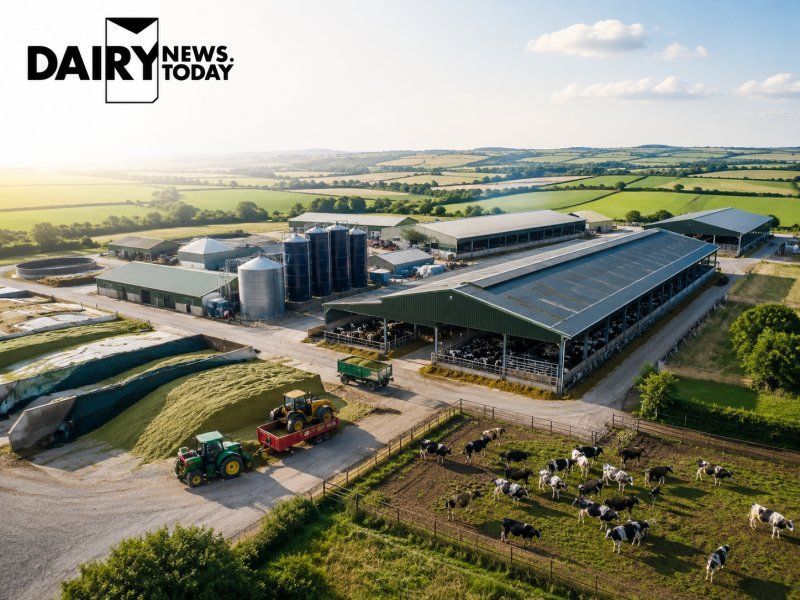
Sauce Montrull’s dairy economy once consisted of numerous family-run holdings. Veterinarian Edgardo Churruarín Montrull recalls that a large farm in the area produced roughly 500 litres of milk a day, while many households managed with 40 or 50 litres. The milk was taken to Paraná, first by two- or four-wheeled carts and later by lorries. The corrals at Almafuerte and Zanni served as meeting and resting points for the people transporting the production.
Several changes modernised the sector. Permanent pastures, silage, electric fencing and artificial insemination were introduced over time. Decree-Law 6640, issued in 1963, promoted improvements in hygienic and sanitary standards. Two years later, the Cooperativa Tambera Paraná, known as Cotapa, was established and became an important organisation for smaller producers.
Omar José Paulini, who was born and raised in Sauce Montrull, recalls that cooperative enterprise became a new term in the area in the late 1950s and early 1960s. Cotapa’s creation, he says, gave dairy farming a strong impetus, particularly for smaller holdings. Family farms also adopted training from Argentina’s National Institute of Agricultural Technology, refrigeration equipment and other methods as production took on more business-oriented features.
The insemination centre at La Picada was another part of the transformation. Churruarín identifies it as the first such centre in Entre Ríos. It initially used fresh semen and later introduced semen frozen with liquid nitrogen. A vehicle was dedicated specifically to providing insemination services, which was described as a significant innovation at the time.
At the start of the 21st century, agriculture, especially soybean cultivation, expanded across the region. The source describes higher prices and lower labour requirements in agriculture as factors in the gradual displacement of dairy production. The change also affected the area’s social structure: the former rural population linked directly to dairying largely disappeared, leaving two settlements separated by fields used mainly for soybeans or wheat.
Raúl Lell’s farm is now the only dairy operation remaining in Sauce Montrull. His father began dairying when the family arrived in the area in 1959, when most nearby homes had cows and produced milk. Lell says the landscape was dominated by dairy farms and livestock until the 1980s, before agriculture covered the area. His family’s milk was sold first through Cotapa, then to Sauque in the industrial park and later to LW in Espinillo. Each industrial problem or closure required the family to find another buyer.
Lell also describes difficulties caused by roads, mud, rain and extended periods of low prices. He says the scale of production became decisive because the financial figures no longer worked when output failed to reach a certain level. His daughter and her partner remain connected with another dairy operation, while his son chose a different occupation. Lell continues to work with his cows and says he will remain in the activity “until my legs give out”.