San Ignacio lifts milk yield up to 76% after installing three robots
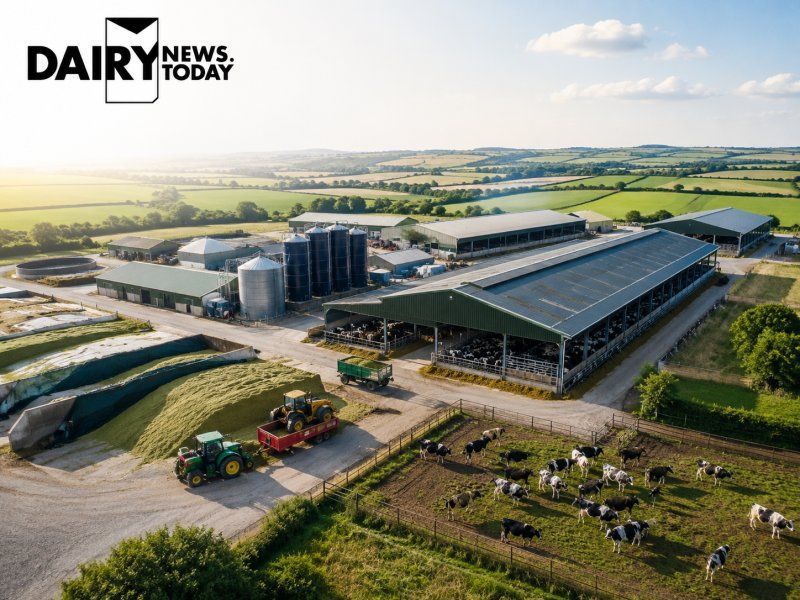
At the farm in Arroyo Algodón, Álvaro “Vasco” Ugartemendía and his team replaced a conventional 24-place milking installation with a voluntary system. Cows approach the machines according to their own routines rather than following fixed milking times. The farm’s managers record an average of 2.7–2.8 milkings per animal each day. Nélida Andrada, who oversees day-to-day herd management, provided the milk-yield figures, which represent an increase of approximately 71%–76%, depending on the final volume used in the comparison.
Ugartemendía also reported an increase in milk solids per cow, from 720–750 grams previously to more than 800 grams. He is involved in cheese production through Lácteos Capilla del Señor, for which the solids available in milk are relevant to manufacturing yield. The herd’s feeding regime combines grazing, silage, hay bales and individually allocated compound feed. The robotic system links feeding with milking and allows the team to monitor individual animals. The managers also observed changes in cow behaviour and said the organisation of work had become less dependent on weather conditions.
Andrada described changes to her family routine in comments to TodoLechería. Before automation, she had to leave gatherings and celebrations to return to the farm for milking. The equipment has reduced some repetitive duties and given her greater flexibility in arranging her working day. Staff can also consult the machines’ records on mobile phones. Those records help them identify cows requiring attention, review health indicators and detect behavioural changes that could signal a developing health problem or an approaching calving.
The farm has redistributed staff responsibilities following the installation. Ugartemendía said the intention was to make better use of employees’ skills and free time for other duties. One initiative involved acquiring equipment to prepare the farm’s own conserved forage. San Ignacio has begun making hay bales and is considering providing that service to other farmers. These activities form part of the changes to work allocation introduced alongside the automated milking system.
The robotisation project began taking shape in 2024. To finance it, the farm obtained funding from Banco de Inversión y Comercio Exterior (BICE) through a lending facility linked to litres of milk. It also received support through a Córdoba government programme providing reimbursement of interest charges, while Lely supplied technical assistance. These arrangements accompanied the transition from the previous milking installation to the three-robot operation.
San Ignacio recently hosted a Tranqueras Abiertas open-farm event, giving other producers an opportunity to see the installation and hear about its operation. The farm’s managers said they were still learning how to use the full range of information generated by the equipment and were continuing to adjust the system’s operation.