Sakina Thakur Builds a Dairy Business with 14 Holstein Friesian Cows
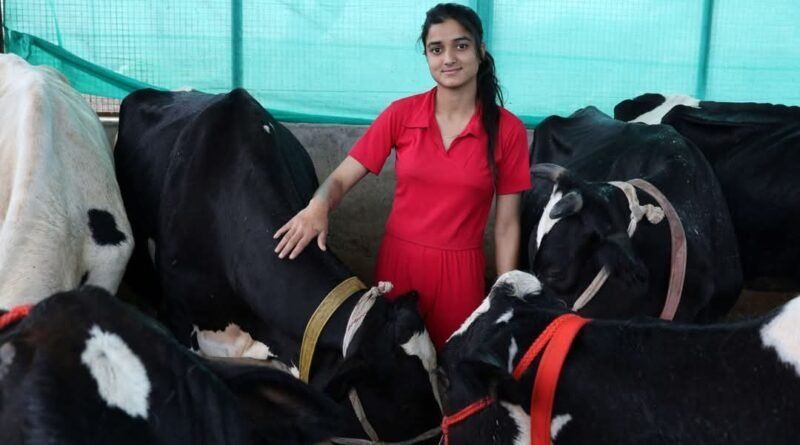
Sakina Thakur, from Mandi in Himachal Pradesh, chose dairy farming after completing a Master of Arts degree in History. Her decision reportedly drew criticism, but she continued with the support of her family. The account of her business describes dairy farming as her chosen enterprise rather than a conventional career.
She began operations in 2024 with ₹1.25 lakh from her own savings and a further ₹2 lakh raised through a bank loan. Thakur treated the farm as a commercial operation requiring investment, regular production and improvements in management. The available account does not provide a breakdown of the loan’s repayment terms or the farm’s operating costs.
A herd of 14 cattle
By 2025, Sakina Dairy Farm reportedly kept 14 Holstein Friesian cows. The breed has a high milk-producing potential when provided with suitable feed, housing and animal-health care. The reported herd produced approximately 112 litres of milk each day, equivalent to an average of eight litres per cow, although the actual output would depend on which animals were lactating, their stage of lactation, nutrition and health.
The farm’s monthly earnings were put at roughly ₹1.25 lakh. The source does not establish whether that amount refers to sales revenue or income after expenses. Feed, labour, veterinary treatment, breeding, electricity, maintenance and loan repayments are among the costs that can affect a dairy business’s financial results.
Management and resource use
Thakur has reportedly used modern equipment and management practices in running the farm. Milking machinery can reduce manual work and help maintain regular routines when it is cleaned and maintained correctly. Hygiene during milking is relevant to milk quality and to the risk of contamination.
The reported approach also includes attention to feed quality, clean water, cattle comfort, vaccination, veterinary services and reproductive health. These areas are particularly relevant to high-yielding breeds such as Holstein Friesians. Thakur has also used cow dung as organic fertiliser, returning manure nutrients to the soil and incorporating waste handling into the farm’s operations.
Co-operative activity
Alongside her own farm, Thakur has reportedly participated in a women-led dairy co-operative serving about 70 families in nearby villages. Such organisations can combine members’ milk supplies, arrange collection, connect producers with buyers and improve their negotiating position. Depending on their structure, they may also provide veterinary assistance, animal-nutrition advice and training.
The account places Thakur’s enterprise within India’s wider dairy network, which includes farmers, co-operatives, collection centres, processors and distributors. It also identifies access to finance, practical training, veterinary care, dependable milk collection and stable markets as factors relevant to farmers establishing dairy businesses. The production and earnings figures reported for Sakina Dairy Farm have not been independently verified in the supplied account.