Rio Grande do Sul’s Dairy Future Is Changing on Farms
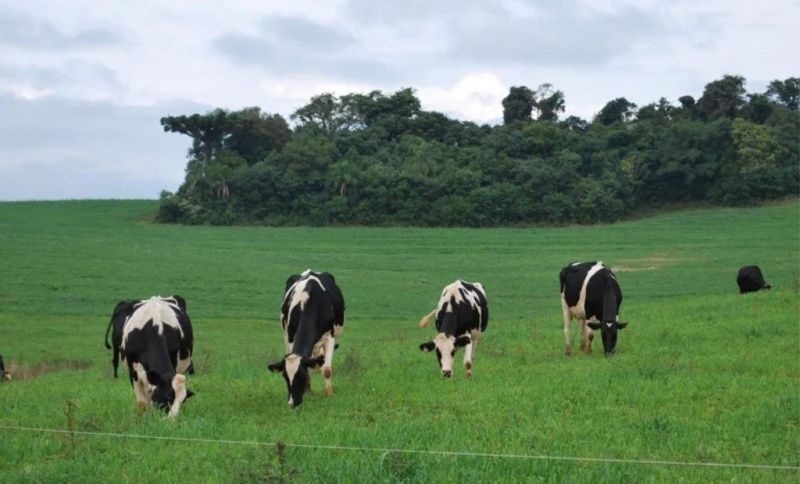
Planting trees is one of the practices cited by Brilhante in a discussion about the future of dairy farming in Rio Grande do Sul. Rows of eucalyptus can provide thermal comfort for cattle, which are sensitive to high temperatures, with an effect on milk production.
Other measures include reusing materials, installing biodigesters that turn animal waste into energy and managing green areas. These options are being considered as part of an approach that combines farm efficiency with the conservation of natural resources.
The subject will be addressed at the Milk Summit Mercosul 2026, scheduled for October 14th and 15th in Ijuí. Brilhante is due to present these practices at the event, while Emater technical assistant Jaime Ries will present a field study.
The changes in the dairy sector are also reflected in the number of producers. A study by Emater/RS-Ascar cited in the report recorded 84,199 milk producers in the state in 2015 and 28,946 in 2025. During the same period, annual milk production stayed near 4bn litres.
Ries describes the development as a structural reconfiguration of the dairy chain. The factors identified in the report include greater use of technology, increased exposure to foreign competition and higher vulnerability to climatic conditions. He also points to the availability of workers and the willingness of families to maintain an activity requiring continuous work and a daily presence.
Family succession is therefore discussed alongside technology. Farms can adopt systems to limit waste, improve animal management, use residues, preserve vegetation or measure their greenhouse-gas balance, but the measures must suit the conditions of each operation.
The Plano ABC+ RS is organised around eight areas: restoring degraded pasture; agroforestry systems; biological inputs; crop-livestock-forest integration; planted forests; management of animal-production waste; irrigated systems; and intensive finishing. The programme also has equipment to measure greenhouse gases and the amount of carbon stabilised in soil, allowing farms to calculate their carbon balance.
Brilhante’s proposal is to link production and conservation as farms face pressure from climate conditions, labour costs and competition. In the report, sustainability is presented as part of decisions about how to produce milk, organise a property and maintain the activity for the next generation.