Researchers Used Milk Spectra to Identify Heat Stress in Cows
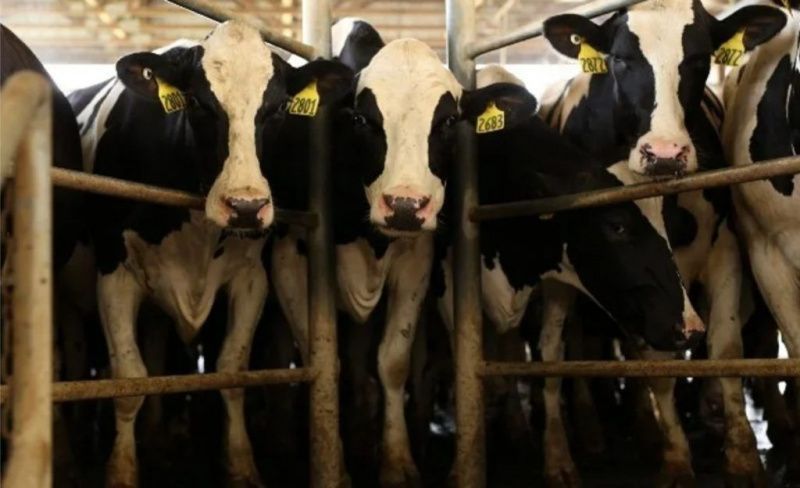
Researchers at the University of Liège examined whether milk itself could provide biological information about heat stress in dairy cows, rather than assessing the condition only through declines in milk output during hot weather. Their analysis used more than one million mid-infrared (MIR) milk spectra collected from over 82,000 Holstein cows.
A previously developed prediction model classified the animals into three groups: “unaffected”, “intermediate” and “affected” by heat stress. The classifications were based solely on changes detected in routine milk spectra. A subsequent genetic analysis used more than 171,000 milk records from 64,035 cows across 603 herds.
The trait’s genetic component
The researchers estimated the heritability of the MIR-derived heat-stress phenotype at 0.10. The estimate was described as modest, but it fell within the range reported for other traits associated with heat stress. The researchers said this indicated that the phenotype contained enough genetic variation to support selection in breeding programmes.
The team also assessed the phenotype’s genetic relationships with economically important traits. Its relationship with milk production showed relatively weak antagonism compared with many conventional heat-tolerance traits based on the temperature-humidity index, or THI. The reported small positive correlation with milk production was consistent with less genetic conflict between production and heat-stress response than has been reported for those THI-based measures.
The study found moderate negative correlations with fertility and longevity. Cows genetically predisposed to lower MIR-based heat-stress scores also tended to have more favourable genetic merit for reproductive performance and productive life. The analysis therefore compared the new phenotype with traits covering production, reproduction and the length of an animal’s productive period.
Genomic associations
To investigate the biology underlying the phenotype, the researchers conducted a genome-wide association study. It identified 12 genomic regions associated with the predicted heat-stress response. Several of these regions overlapped genes that had previously been linked to heat tolerance.
The overlap provided additional support for the interpretation that the MIR-derived phenotype reflected biological differences rather than only changes in milk composition. The report was produced by eDairyNews using information published by Ciência do Leite.