Researchers use rumen fistulas to study cow digestion
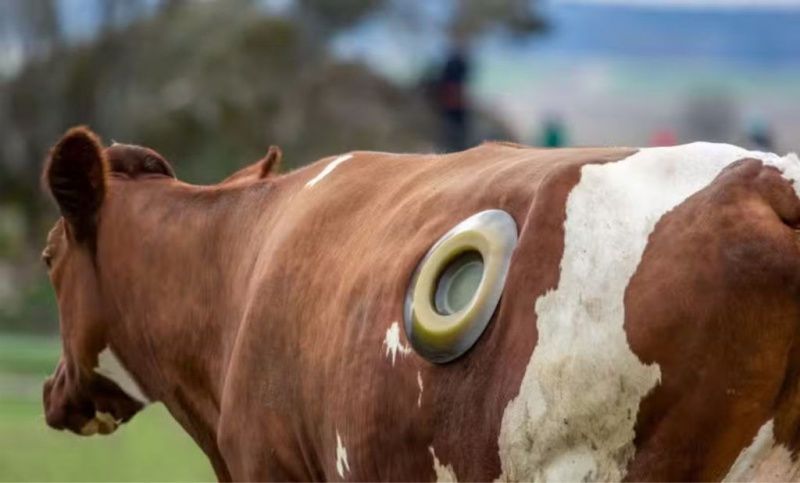
A rumen fistula is a surgically created opening fitted with a flexible, biocompatible cannula in the cow’s left paralumbar fossa. The location is used because the rumen occupies much of the left side of the abdominal cavity. The rumen is the largest of the bovine stomach’s four compartments; the others are the reticulum, omasum and abomasum.
After recovery, the cannula provides what researchers describe as “long-term access” to the ruminal environment. It reduces the need for repeated invasive procedures, including passing a tube through the oesophagus. A capped opening remains sealed except when researchers need to insert or remove material, and the cow can carry out its normal activities between procedures.
Researchers can collect both liquid from the rumen and solid feed particles at different stages of digestion. They can also place samples inside the rumen to observe how they break down. These procedures allow studies of fermentation and the rumen microbiota, as well as assessments of feed and additives.
The access can be used to record changes in the rumen at different times of day or following different treatments. According to researchers Mirton José Frota Morenz, João Paulo Pacheco Rodrigues and Bruno Campos de Carvalho, the technique is intended to establish durable access for systematic observation. The resulting work is used in the formulation of diets and in the development of production systems.
Not every cow is selected for such research. Animals undergo an assessment that considers their health, temperament and ability to remain in an experiment for an extended period. Because some animals may be used for several years, the selection process also takes account of their suitability for long-term participation.
Once healing is complete and no complications are present, a cow may return to the herd. Subject to the responsible veterinarian’s decision, the animal’s condition and the applicable research protocols, it may also remain in milk production and reproduction, as can occur with dairy cows.
In Brazil, research involving rumen fistulas is covered by Law No. 11,794 of 2008, rules issued by the National Council for the Control of Animal Experimentation (CONCEA) and the Brazilian Guideline for the Care and Use of Animals in Teaching or Scientific Research Activities. Participating institutions must be accredited and have an Animal Use Ethics Committee. Protocols must cover implantation, including anaesthesia and analgesia, as well as postoperative recovery, housing, maintenance, handling and experimental use, and must receive the committee’s assessment and authorisation.