Prehistoric Animal-Shaped Vessels Held Milk 3,000 Years Ago
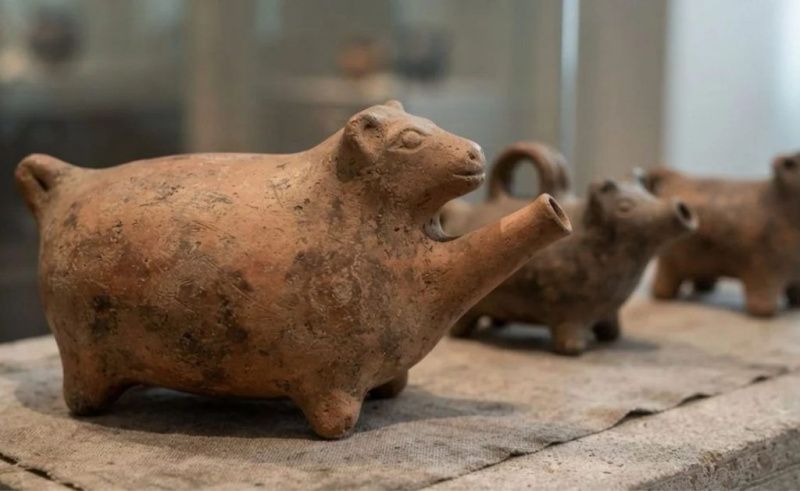
Researchers examined residues preserved inside small ceramic vessels discovered in Germany. The objects date from roughly 3,000 years ago and have narrow spouts, with some designed to resemble animals or imagined creatures. Their shape and size distinguish them from ordinary storage containers.
The chemical evidence consisted of fat from the milk of domesticated ruminants. The analysis is consistent with milk from cattle, sheep or goats, but it does not identify one particular species. It establishes that milk from managed herds was being used as food and that vessels suited to its delivery were available.
The containers measured about 5 to 10 centimetres across. Their openings were particularly narrow, and some examples included feet and animal-like features. Similar vessels have been reported in Europe from the Neolithic period, while finds became more frequent during the Bronze and Iron ages.
The archaeological context helped clarify their likely function. Three of the vessels came from children’s graves in Bavaria. That association supports the interpretation that they were used to feed young children or assist with the transition away from breastfeeding. Without the burial context and residue analysis, the unusual forms could have had several possible interpretations.
The findings connect domesticated-animal milk with child nutrition in Europe about 3,000 years ago. They also show that the design of these small objects corresponded to their proposed use: each was compact and equipped with a narrow spout. The evidence comes from the combination of the vessels’ physical characteristics, their location in child burials and the chemical traces retained by the ceramic.