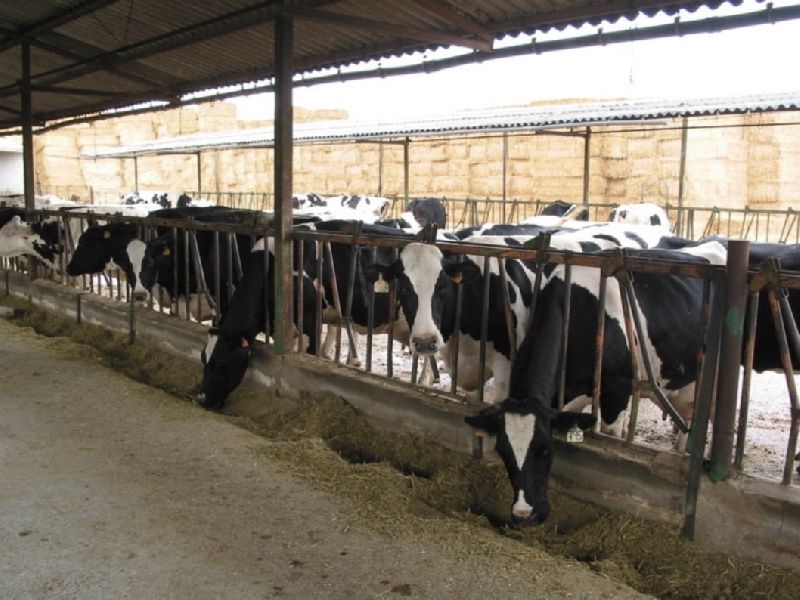
Patos de Minas region increased milk production 6.44-fold

In 2025, Patos de Minas produced 249.24 million litres of milk, according to figures cited in an article by Célio Gomes Floriani in Folha Patense. That volume exceeded the 239.19 million litres produced collectively by Amapá, Roraima, the Federal District, Acre, Piauí and Amazonas.
Amazonas recorded 72.91 million litres and Piauí 71 million. Acre contributed 36.88 million litres, the Federal District 32.60 million, Roraima 20.66 million and Amapá 5.14 million. Taken together, the six jurisdictions remained below the output of Patos de Minas alone.
The wider Patos de Minas dairy hub produced about 319.23 million litres in 1990, when the municipality ranked below Ibiá. Its output reached 1.93 billion litres in 2024 and 2.06 billion in 2025. If treated as a state, the hub would rank sixth nationally by milk production.
Patos de Minas ranked third among Brazil’s leading milk-producing municipalities. It was followed by Patrocínio, Lagoa Formosa and Coromandel. The figures were presented as part of an account of the region’s expansion over the period.
The article also placed the region’s development alongside the history of Cemil. The cooperative was formally founded on September 8th 1992 in Campos Belos and opened on September 24th 1993 in Patos de Minas. It was established through the union of cooperatives seeking ways to market and expand milk production. Floriani described cooperatives as important to the expansion and viability of dairy production in Brazil, particularly for small and medium-sized farmers.
National milk production reached 36.68 billion litres in 2025, up 2.7% from the previous year and marking a third consecutive annual increase, according to the IBGE. The statistics, released on September 30th 2026, identified a significant rise in productivity. Output per milked cow rose 5.6% from 2024 to a record 2,498.7 litres.
The South had the highest average productivity in 2025, at 4,300 litres per milked cow, followed by the Southeast at 2,900 litres, the Centre-West at 2,000, the Northeast at 1,700 and the North at 957. The value of national milk production was R$89.5 billion, calculated using the quantity produced and the average price paid to farmers. The average price was R$2.44 per litre, unchanged from 2024. Industry received 75.2% of the milk, while the remainder went to uses including household consumption and artisanal cheese-making.