Optimizing Fresh Milk Logistics with Advanced Routing Models
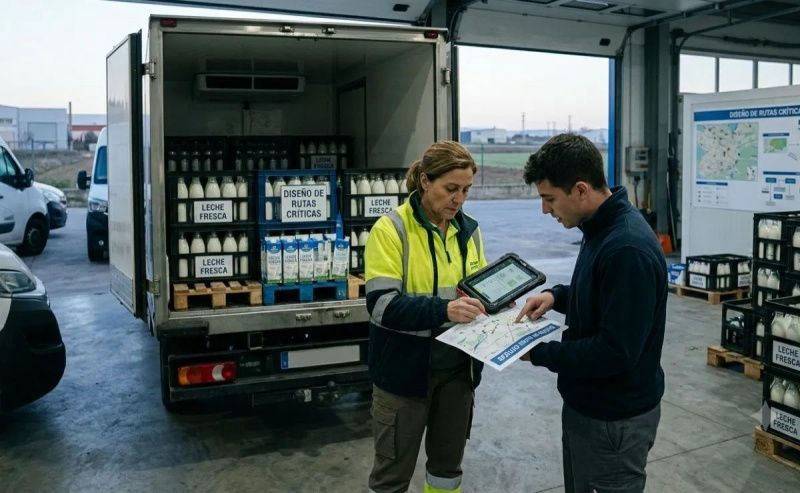
In the logistics of fresh milk and perishable dairy products, applying advanced routing and geographic clustering algorithms has proven to be effective in reducing travel distances by up to 30%, thereby preserving the microbiological quality of the milk. The primary and secondary distribution of these products is increasingly pressured by volatility in fuel prices and narrow operational margins, making critical route design a strategic discipline to balance logistical profitability with product quality.
According to the Food and Agriculture Organization (FAO), the collection phases at farms and transportation account for more than 30% of total dairy processing costs. Hence, maintaining a reliable cold chain and efficient routing are priority areas to sustain the industry's competitiveness. FAO's technical guidelines recommend that milk should be collected and transferred to processing plants or cooling centers within four to six hours after milking to preserve safety and prevent acidification.
This strict microbiological window requires consolidating volumes through geographic clustering of producers, setting rigorous collection schedules, and using fleets with appropriate volumetric capacities. Intermediate cold storage tanks are also essential to mitigate bottlenecks during peak production times or road contingencies.
Industrially, managing perishable products demands dynamic planning to ensure high service standards. Leandro Manoukian, Supply Chain Planning Coordinator at Danone Argentina, highlights that the main challenge is managing inventories and designing flexible routes that minimize transportation costs without compromising the freshness of the milk.
To address the complexity of routing in dairy basins and last-mile channels, the industry increasingly relies on logistical optimization models like the Vehicle Routing Problem (VRP) and its Capacity Constrained variant (CVRP). The mathematical formulation of these models allows the allocation of units and the most efficient routing based on traffic, load capacity, and reception time windows.
International research confirms that applying these digital tools reduces fleet travel times and distances by 16% to 30%. The direct benefits of intelligent logistics extend beyond reducing operational expenses and carbon footprints; they also directly impact consumer satisfaction and the sustainability of the livestock sector. Reduced transit times lead to a significant decrease in food waste due to early expiration or thermal ruptures.
In a context characterized by input price variability, investment in critical routing technologies and operational training becomes an essential requirement to enhance the resilience of the dairy supply chain.