New Zealand Researchers Develop MOFs to Capture Dairy Cow Methane
Led by Dr Luke Liu, the research team is designing metal-organic frameworks, or MOFs, to separate enteric methane from air during milking. The work is being conducted as New Zealand’s domestic natural-gas reserves decline and industrial users, including Methanex, reduce production.
MOFs are structures in which metal centres are connected by organic compounds. Their lattices form internal cavities with chemical properties that can be adjusted for particular gases. The researchers found that some designs can bind methane, a molecule that is difficult to capture because of its non-polar tetrahedral structure.
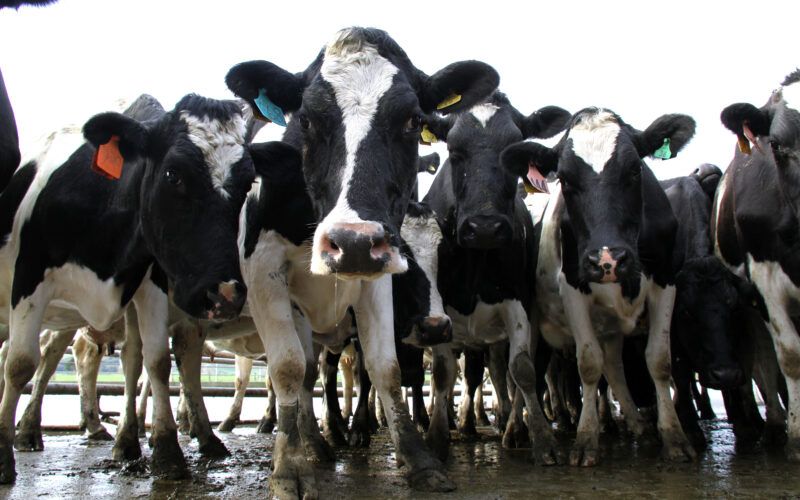
Early testing identified a copper-based lattice as particularly effective at taking methane from moving air. The intended equipment would consist of modular filters fitted to passive extraction fans in rotary and herringbone milking sheds. The fans would draw in air from around cows gathered on the milking platform.
New Zealand has about 5m dairy cows, most of which graze outside throughout the year. That makes collection across the entire pasture-based system difficult. Dr Liu said milking periods could nevertheless provide an opportunity to capture part of the sector’s estimated 17m tonnes of annual dairy emissions.
The project has moved beyond laboratory design into computational and multi-institutional testing. Artificial-intelligence computing has been used to model hundreds of molecular combinations, reducing the field to about 40 MOF candidates considered viable and affordable enough for further assessment. Professor Shane Telfer at Massey University is involved in the trials.
Engineering teams led by Professor Alex Yip at the MacDiarmid Institute will examine the economics of the process. Their work will assess whether the methane released from the filters can be concentrated and purified, and whether it could then be used for industrial energy or to generate power on farms. The research is also being conducted against New Zealand’s estimated carbon-offset requirement of $4bn-$5bn for meeting its 2030 Nationally Determined Contribution targets.