New England dairy farmers use data to time silage harvest
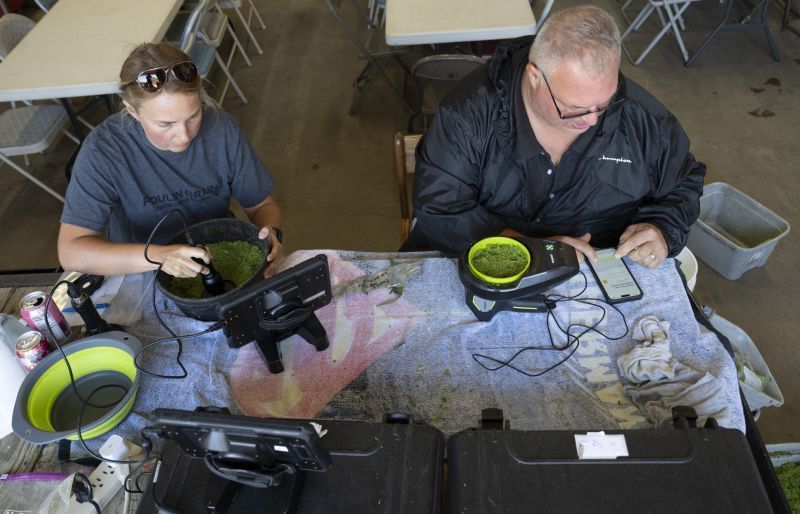
Corn grown for silage is nearing harvest across New England, where it will provide much of the feed for dairy cows during the winter. At Mapleline Farm in Hadley, Massachusetts, specialists from Poulin Grain and Alltech examined samples from about 90 to 100 farms during a testing session this week.
John Winchell, a field administrator for Alltech, operated a portable laboratory in a farm garage. He has conducted this work for roughly 15 years while assisting Poulin Grain with feed-related testing. Crop adviser Tom Beaudry chipped corn stalks brought by farmers, and the resulting samples were placed in labelled containers for analysis.
The tests assess moisture, the maturity of the plants and their nutritional potential. Winchell also considers when the crop was planted, which seed varieties were used and the development of the tassels. Each farm supplied six stalks, after which the specialists prepared a report identifying the days considered most suitable for harvesting.
The target is about 35% moisture at harvest. Winchell said corn stalks lose roughly half a percentage point of moisture each day. The kernels need to be sufficiently developed for cows to consume the silage, but not so hard that nutritional value is lost. Earlier equipment required samples to be dried for 45 minutes; newer machinery produces results almost immediately.
Jessica Dizek, a co-owner of Mapleline Farm, said the testing has been held there every year since 2021. She said the timing of the harvest affects the amount of forage available, its quality and the fermentation of the silage. Silage harvested with excessive moisture can spoil and develop mould in a silo. Farmers can use supplements or buy feed elsewhere, but those options add costs.
“Timing the corn silage harvest perfectly is one of the most critical decisions a dairy farmer makes all year to protect herd health and milk components,” Dizek said. She described the aim as maximising homegrown feed and said that farmers have one opportunity to cut the crop and put it into storage. She added that Alltech and Poulin Grain were helping farms assess the nutritional value of their corn.
Dizek asked Winchell about the preliminary results before receiving Mapleline’s completed report. He said the farm could harvest in about 20 days, with the testing offering a more precise indication than the method of squeezing corn used by some Amish farmers. Winchell said most farmers in the area would probably wait longer before harvesting. He described the summer as a normal season, with sufficient rain and heat.