Nestlé Marks 160 Years Since Its Founding
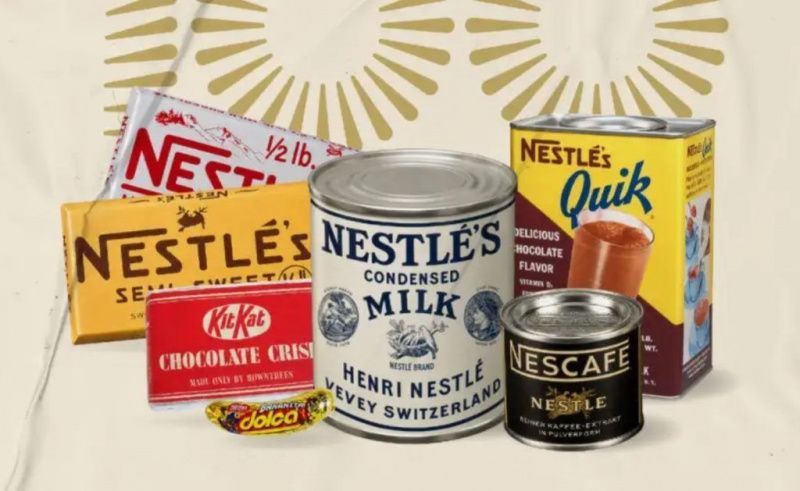
Nestlé’s origins date to 1866, when brothers Charles and George Page established the Anglo-Swiss Condensed Milk Company in Switzerland. The company opened Europe’s first condensed-milk factory that year.
In 1867, pharmacist Henri Nestlé developed Farine Lactée in Vevey, combining milk and flour for infants who could not be breastfed. The product was introduced at a time of high infant mortality and became the starting point for the business associated with the Nestlé name.
Henri Nestlé also provided the symbol used by the brand. The image of a nest was based on the Nestlé family coat of arms. Its design has changed over time, but the symbol has remained connected to the company’s origins.
Henri Nestlé’s business merged with Anglo-Swiss in 1905, forming the group that established the basis of the modern company. Nestlé later expanded beyond infant food. Nescafé was introduced in 1938 after research into soluble coffee that retained the aroma of roasted beans. The group added MAGGI in 1947, created Nespresso in 1986 and acquired Purina in 2001, strengthening its position in pet nutrition.
Nestlé’s portfolio now includes food, drinks and animal nutrition, with international brands such as Nescafé, Nescafé Dolce Gusto, Nespresso, Nesquik, Nido, KitKat and Purina. The group also sells products developed for individual markets.
In Argentina, where Nestlé has operated continuously for 96 years, the company has six factories in Córdoba, Santa Fe, Mendoza and Buenos Aires province and employs more than 1,900 people. Its local products include Nescafé Dolca, Bananita Dolca and Nestlé chocolates, alongside the group’s international brands.
Gian Carlo Aubry, Nestlé’s chief executive for Argentina, Uruguay and Paraguay, said the 160-year milestone represented more than a historical celebration. He identified continued adaptation and the development of production, talent and innovation in local markets as the company’s task.