Nestlé and Danone Face Complaints Over Infant-Formula Advertising
The complaints were filed on 19 August 2026 with Brazil’s National Consumer Secretariat (Senacon), Procon-MG and the National Health Surveillance Agency (Anvisa). Idec asked Senacon and Procon-MG to open administrative proceedings and called for the removal of certain promotional offers from marketplaces and the suspension of identified sponsored advertisements on Google.
The investigation examined advertising on Amazon and Magazine Luiza, as well as paid placements on Google. On Amazon, the platform itself was listed as the seller in 61.6% of the reviewed advertisements. Its share reached 49.3% on Magazine Luiza. Each platform was also responsible for delivering more than 80% of the advertisements examined in its respective environment.
A separate review by the International Baby Food Action Network’s Brazilian branch used DIGI-CODE, a platform developed by the Oswaldo Cruz Foundation, and records from Google’s Ads Transparency Center collected on 23 and 24 June 2026. Across three independent technical reviews, researchers found 81 advertisements for products that compete with breast milk.
Of those advertisements, 71 concerned infant formulas, follow-on formulas or products intended for newborns at high risk. Nestlé accounted for 68 advertisements, while three were associated with Danone. The advertisements directed consumers to the companies’ official FamilyNes and Mundo Danone stores. Idec said that this feature indicated the advertisements had been purchased by the manufacturers themselves.
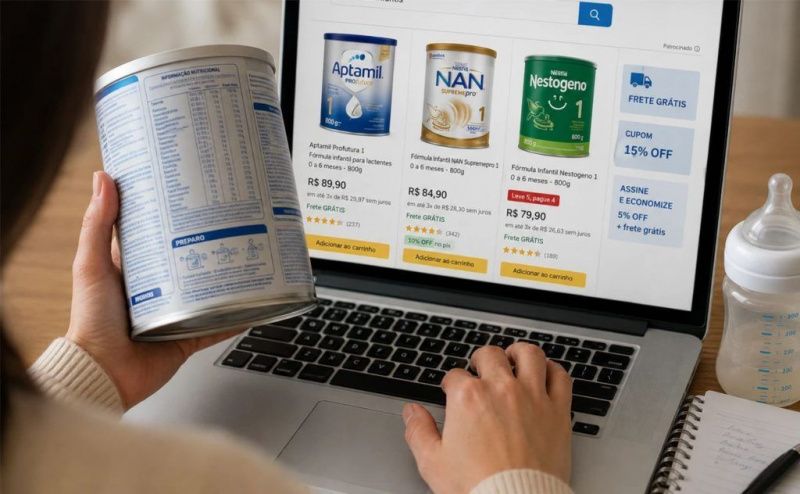
The reviewed material included discounts, coupons, free delivery, product bundles, “buy five, pay for four” offers and subscription schemes offering commercial benefits. The analyses also recorded claims about babies’ health, growth and development, comparisons with breast milk, emotional appeals, images of feeding bottles and demonstrations of preparation.
Idec also identified two advertisements on Magazine Luiza that it considered misleading. It asked Anvisa to investigate Nestlé and Danone, including the nutritional and health-benefit claims in the advertisements, label images, possible differences between the products advertised and those displayed, and subscription programmes offered by the manufacturers. The group further asked the companies and platforms to disclose other advertisements that may have appeared outside the periods reviewed.
No administrative conclusion has been issued on the complaints. The material submitted by Idec remains under examination by the authorities, which are expected to assess the allegations and the role of each company.