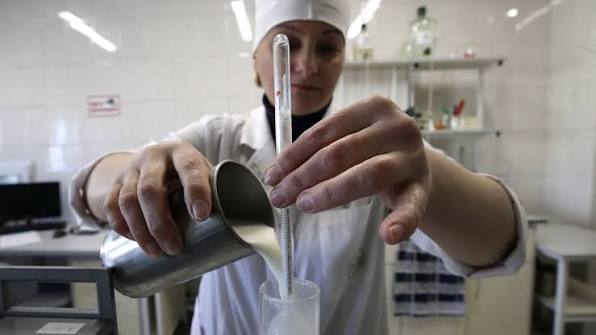
Milk’s colour: how proteins and fat scatter light
Water accounts for about 87% of milk, with proteins, fat, lactose, minerals and vitamins among its other constituents. Caseins make up approximately 80% of its total protein and assemble into small structures called micelles. These remain suspended in the watery phase alongside globules of fat. Light encountering these structures changes direction, a physical process known as scattering. The particles scatter different wavelengths of visible light, and the combination reaching the eye gives milk its white appearance. A white pigment is therefore unnecessary to produce its characteristic colour: the apparently uniform liquid contains a complex mixture of dispersed components.
Removing fat changes how milk interacts with light. The production of skimmed milk takes away much of the population of fat globules that contributes to scattering. Casein micelles remain, preserving a whitish appearance, but they can scatter a relatively greater proportion of the shorter wavelengths associated with blue light. Skimmed milk can consequently have a faint blue cast, most readily noticed when it is placed beside whole milk. This slight difference in appearance is normal and does not indicate a loss of quality.
Natural pigments in an animal’s feed can also affect the resulting milk. Beta-carotene, found in green forage, is one such pigment and can pass into milk fat. A larger proportion of fresh pasture in cows’ diets can raise the carotenoid content, producing a creamier or more yellowish shade. Breed, season and production conditions can also be associated with differences in colour. Cow’s milk may thus range from white to slightly yellow, and a modest yellow tint does not necessarily indicate that the product has deteriorated.
Milk from goats and sheep generally looks whiter than cow’s milk. This is partly associated with differences in the way the animals convert beta-carotene into vitamin A, leaving less of the pigment in their milk fat. The carotenoids retained in cow’s milk fat, by comparison, can give it a pale yellow appearance. Differences between species therefore reflect, in part, the amount of natural pigment remaining in the fat, alongside the light-scattering structures present in the liquid.
Industrial treatment and storage can introduce further changes. Under certain heating processes and storage conditions, chemical reactions can alter milk’s shade slightly. In milk exposed to high temperatures, including ultra-high-temperature treatment, reactions between sugars and proteins can cause a little darkening. Such processing-related changes are distinct from those associated with unsuitable storage. The appearance of treated milk can therefore reflect both its original composition and chemical changes occurring during processing or storage.
Normal milk colours include white, cream and pale yellow. Strong or unusual changes, particularly when accompanied by an unfamiliar smell, lumps or an altered texture, can indicate deterioration. Pink, reddish, greenish or intensely blue colouring is not usual in commercially sold milk; the source advises against consuming a product showing those colours. Colour alone cannot establish what has caused an alteration, but it can provide a warning. The intensity of the change and accompanying changes in smell or texture are among the signs described in the explanation.
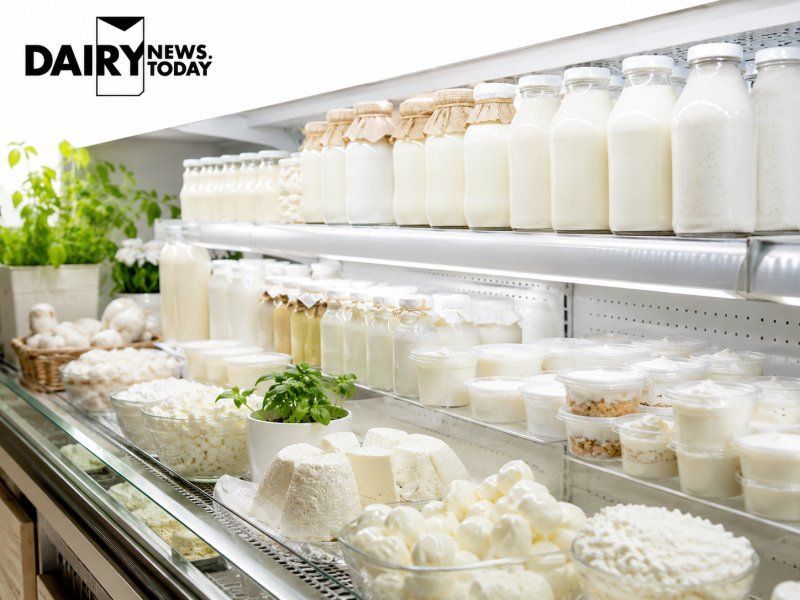
The same components help account for differences among dairy products. Yogurt and many fresh cheeses retain a white appearance because they contain a high proportion of water and preserve structures that scatter light. Butter and some cheeses, which have a greater concentration of fat, can look more strongly yellow because carotenoids within that fat become more visually prominent. Changes in moisture and composition during the manufacture and ripening of certain cheeses also modify their appearance.