Milk Production Requires Routine, Investment and Constant Attention
Mandaguari once had a large dairy industry, with almost all milk produced in the municipality collected and processed by the former Mandaguari Dairy Cooperative, known as Colari. The activity later declined as large producers left and the cooperative moved to Londrina. Official information on the number of farmers now devoted exclusively to dairy production in the municipality is limited.
One of the remaining specialised dairy farms is located on Estrada Belém, near kilometre 14 of Estrada Alegre. Antônio Furnanetto, 56, has managed the property for about ten years, with Ronaldo Chavioli, 43, involved in administration and general work. Chavioli has lived on the farm for five years and takes part in the daily handling of the animals.
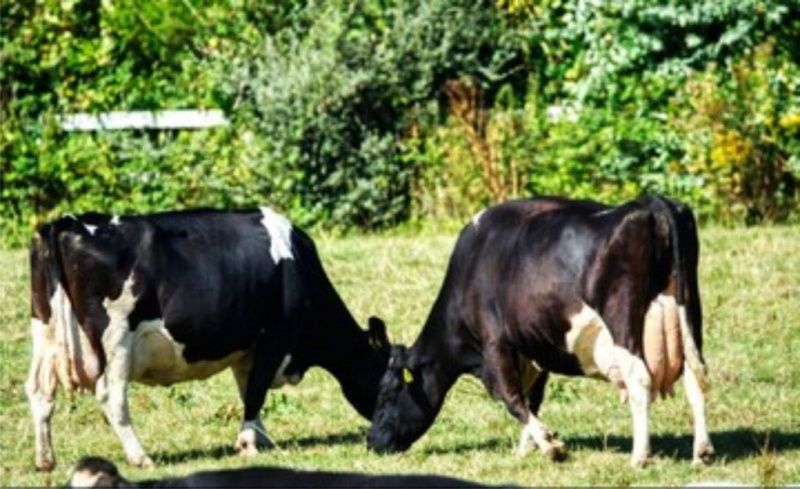
The farm currently produces approximately 3,000 litres of milk per day, while its target is about 5,000 litres. The herd consists mainly of Holstein cattle. The animals are kept under confined and semi-confined systems, and the producers plan to add Jersey cattle in the future. They describe Jersey cows as less productive by volume than Holsteins but more robust, with milk that may contain higher concentrations of some nutritional components, including protein.
From milking to cooling
The cows are milked twice a day with mechanical milking machines, at intervals of roughly 12 hours. The system limits manual contact with the milk and transfers it through stainless-steel equipment directly into a cooling tank. The milk remains chilled until it is collected every two days by Volpato dairy, based in Arapongas.
The farm is considering a third daily milking, which would reduce the intervals to about eight hours. The work involves a couple responsible for milking, relatives who help care for calves and clean the facilities, and Chavioli, who coordinates feeding. Day labourers are hired when needed. “It is a Sunday-to-Sunday routine,” Chavioli said, describing the need to feed, monitor and care for the animals every day.
Climate and feed
The producers said high and low temperatures, as well as periods of rain, affect the animals’ well-being and the amount of milk produced. They also reported difficulty planning around changing conditions, including intense cold, extreme heat and rain outside the usual pattern. In winter, milder temperatures can improve thermal comfort and support production, while weather extremes create difficulties for dairy farming.
Nutrition is managed with advice from an animal nutrition professional. Cows in confinement receive maize silage, concentrated feed, haylage and hay, much of which is produced on the farm. Maize plants grown for cattle feed are harvested, chopped and stored in silos when they reach the appropriate stage of development. Proper storage preserves the silage, which is used as a principal feed source throughout the year.
Machinery and equipment have reduced some of the physical burden of the work, but the activity continues to require daily attention. Furnanetto said the farm’s relationship with the animals and the land was also part of the work. “Every day there is a product to be sold. Milk is one of those things—we do it because we love it. We were born for this,” he said.