Milk Can Be Frozen, but Its Texture May Change
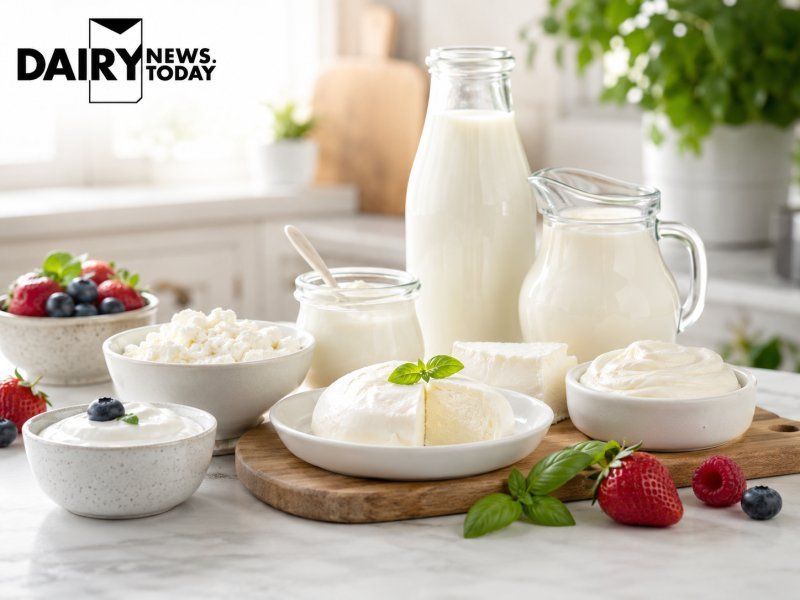
Milk can be stored in a freezer, but its composition may affect how it looks and feels after thawing. Varieties with a higher fat content are more likely to show noticeable textural changes. Separation after freezing does not by itself mean that the milk has deteriorated.
Milk consists of roughly 87-88% water and 12-13% solids, including fat, lactose, proteins, vitamins and minerals. As the water freezes into ice crystals, the remaining liquid becomes more concentrated. This can disturb the distribution of fat, proteins and water, producing small lumps, a slightly grainy consistency or visible differences in colour.
The fat-rich portion may appear more yellow, while the more watery fraction can take on a faint bluish tone. Milk also freezes below the usual 0°C mark: its cryoscopic point is approximately -0.53°C to -0.55°C, because of the lactose and mineral salts it contains.
For storage, the milk should be frozen while it is still in good condition. A clean, airtight container suitable for freezer use is recommended, with room left at the top because the liquid expands as it freezes. Dividing the milk into portions and marking each container with the freezing date can limit unnecessary thawing.
The recommended method for thawing is to place the container in a refrigerator and allow the process to proceed slowly. Depending on the quantity, this may take several hours. Once liquid, the milk should be shaken or mixed thoroughly so that fat and other components separated during freezing are redistributed.
Thawed milk may not return fully to its original consistency, but it can still be used in dishes such as béchamel sauce, croquettes, flans, puddings, cakes, mashed potatoes and porridge. It should be discarded if it has a sour or rancid smell, an abnormal colour, or a curdled texture with thick lumps that remain after mixing. These signs differ from the milder separation and textural changes that freezing itself can cause.