Madhusudan backs Diwali dairy checks and pledges to share gains with farmers

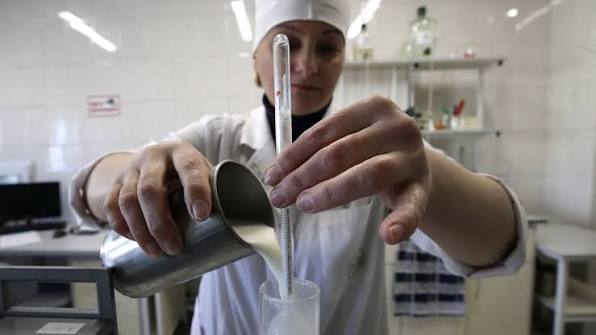
India's Food Safety and Standards Authority, FSSAI, and state food-safety commissioners have stepped up festive sampling, while several states have temporarily halted sales of dairy analogues. Speaking to DairyNews7x7 editor Kuldeep Sharma, Aggarwal said the measures were disrupting low-priced substitutes sold as dairy products, rather than supplies of milk or the manufacture of cream-based ghee. He argued that these products had taken orders from genuine dairy suppliers serving sweet shops and hotels. Aggarwal welcomed enforcement of existing food-safety legislation and product standards, while asking regulators to maintain consistency and fairness. He said Madhusudan would make its factories and laboratories available for inspection. Operators' concerns, he added, centred on the time taken to receive laboratory reports and uncertainty about subsequent procedures.
Aggarwal linked the enforcement campaign to farmers' income through the market for milk fat. Farmers' payments depend heavily on fat content, he said, while demand for ghee, butter and cream helps determine the value of that fat. In his account, vegetable-fat products passed off as dairy reduce demand for milk fat and weaken farmers' returns. He put the milk requirement for a kilogram of ghee at roughly 15–18 litres from buffaloes or about 25 litres from cows; a kilogram of paneer requires approximately 5–6 litres of milk. He argued that sales of counterfeit products therefore represent milk purchases that farmers lose, including during the festive period. His appeal to processors was to share the benefits of enforcement with their suppliers, alongside testing their own products before regulatory inspections.
On dairy analogues, Aggarwal said correctly manufactured and labelled vegetable-fat products had legitimate uses in lower-price market segments, industrial applications and certain export markets. The problem, he said, arose when products left factories with labels and invoices but were subsequently presented to consumers as paneer after their packaging had been discarded. He pointed to loose sales through sweet shops and caterers as a particular difficulty for package-based labelling rules. Aggarwal supported the temporary state restrictions while calling for clearer packaging, prominent product declarations, disclosure at counters and on menus, and invoice records extending through the supply chain. He said those measures would also protect analogue manufacturers whose products were sold under a different description further downstream.
For hotels, restaurants and caterers, Aggarwal put the saving from substituting an analogue in a paneer dish at a few rupees, against what he described as risks to licences and reputation. He encouraged restaurants using milk-based paneer to identify it on their menus and retain invoices supporting that description. Addressing household spending, he urged buyers to ask about ingredients as well as price, rather than change their budgets. He also connected the price paid for genuine ghee with payments reaching milk-producing families. These comments formed part of his argument that festive purchases should be supported by information about the product's composition and origin.
Aggarwal said Madhusudan had introduced gas chromatography for ghee three to four years earlier, following a decision by his uncle, Chandra Prakash Agarwal. The equipment represented a substantial investment and was not then required of the company, he said. He described the technique as examining ghee's fatty-acid profile to identify the addition of fats such as vegetable oil or animal body fat. According to Aggarwal, the company invested in the equipment to substantiate its purity claims. He contrasted that approach with conventional certificate tests, which he said could be manipulated. He also cited consumer requests for GC-tested ghee and discussion under the social-media hashtag #GheeKaSach. Each batch undergoes as many as 36 checks during production before dispatch, he said, and the milk used for Madhusudan's ghee comes from its own collection network.
Madhusudan is the principal brand of SMC Group, based in Saharanpur, and began operating in 1992. The business handles approximately 4.5 million litres of milk daily, sourced from more than 300,000 farmers. Aggarwal described a collection network comprising about 11,000 village societies and 70 chilling centres. He listed manufacturing locations at Nanauta, Khurja and, more recently, Bareilly. The brand reaches 19 states and more than 200,000 shops. In describing the company's development, he attributed its approach to founder Sewa Ram Aggarwal and emphasised the gradual expansion of village collection, processing facilities and distribution. His account placed repeat household purchases and confidence in product quality at the centre of the brand's growth.
Aggarwal's endorsement of the enforcement drive came alongside his acknowledgement that inspections during the busiest trading period could unsettle dairy businesses. He said the sector had long sought action against synthetic milk and other falsely represented products through letters and committee work. He asked FSSAI and state commissioners to sustain enforcement while making the process predictable. For the trade, his requested response included restraint on selling prices, a fair allocation of seasonal gains to farmers and voluntary product testing. He committed Madhusudan to sharing those gains and encouraged other processors to make their own commitments publicly.