
Leche para el Bienestar Reopens Tejupilco Milk Outlet
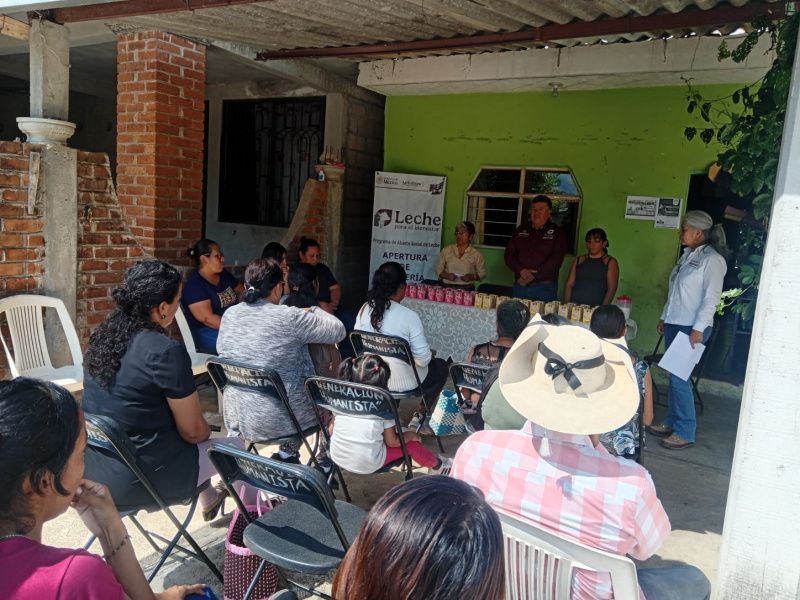
Leche para el Bienestar has formally restarted the milk-distribution point in Llano Grande, a rural community in southern Estado de México. The outlet serves households enrolled in the local beneficiary register and distributes fortified products under Mexico’s social milk-supply programme.
The reopening restores regular access to milk at preferential prices in a region where commercial costs are higher. The programme is aimed at children, pregnant women, older people and people with disabilities. Its stated purpose is to maintain access to basic food supplies and nutrition in rural communities.
Distribution to Llano Grande and other communities in the state’s mountainous south relies on the public company’s central-Mexico infrastructure, including the processing complex in Tlalnepantla and regional collection centres. Products sent to distant locations include fortified powdered milk in sealed sachets and long-life ultra-pasteurised milk. The formulations contain iron, zinc, folic acid and vitamins.
The outlet is operated with the participation of concessionaires and community committees. That arrangement supports weekly inventory checks and electronic verification of household allocation cards. The distribution network is used to serve communities affected by the geographical and climatic conditions of the Balsas basin and southern Estado de México.
In local shops, a litre of commercially pasteurised milk generally costs between 26 and 30 pesos, according to the source. The subsidised outlet provides an alternative for lower-income households facing those prices. The programme’s administration also updates beneficiary registers through socioeconomic censuses to direct food assistance towards families identified as having limited access to food.
Leche para el Bienestar’s operations are supported by co-operation agreements with municipal authorities and neighbourhood representatives, who provide premises for distribution. The federal government covers the difference between industrial production costs and the social recovery price. Expenses include processing, aseptic packaging and transport from central plants.
The continuity of the network also depends on milk purchases from domestic producers. The programme uses a guaranteed-price arrangement for purchases from small and medium-sized dairy farmers, while suppliers face costs for hay, maize silage and protein concentrates. The Llano Grande reopening was reported by the Government of Mexico.










