Leche para el Bienestar opens Mexican outlet to supply 450 families
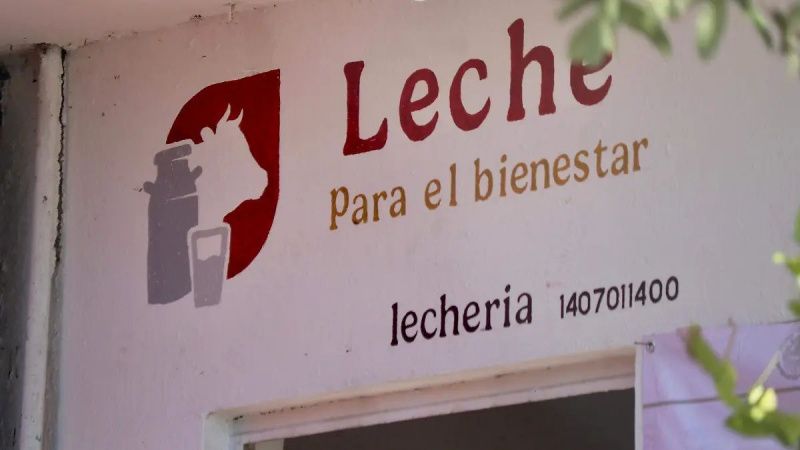
El Salto’s mayor, María Elena “Nena” Farías Villafán, led the inauguration alongside representatives of Leche para el Bienestar (LpB), which operates under Mexico’s Secretaría de Agricultura y Desarrollo Rural (SADER). Participants included Víctor Hugo Pérez Rojas, the programme’s operations director; Jesús Eduardo Almaguer Ramírez, its manager in Jalisco; and local legislator Valeria Guadalupe Ávila Gutiérrez. The outlet forms part of the municipality’s social food-distribution infrastructure, providing milk intended to lower basic food costs for participating households.
The programme sells pure cow’s milk enriched with iron, zinc, folic acid and vitamins A, D and B-group vitamins. Its nutritional provision is directed towards children and older people. El Occidental puts the average supermarket price of commercial pasteurised milk at more than 24 pesos a litre and describes the programme’s subsidised milk as a way to reduce household spending. The report also describes competition in grocery shops and street markets from dairy blends and substitutes made with imported dried whey, modified starches and hydrogenated palm oil.
Milk distributed through the social outlets comes primarily from mechanised and semi-mechanised dairy herds in Jalisco’s production areas. Farm routines include checking the first streams of milk and applying antiseptic to teats before milking to prevent environmental mastitis. Once collected, raw milk is transferred directly into rapid-cooling tanks and brought to 4°C. The report describes this cooling stage as necessary to control bacterial multiplication and stabilise titratable acidity before processing.
At the state-owned operator’s processing facilities, milk undergoes either continuous pasteurisation at temperatures above 72°C or ultra-high-temperature treatment at 138°C for four seconds, combined with aseptic packaging. The processing sequence includes fortification with the listed minerals and vitamins. El Occidental describes the heat treatment as ensuring microbiological safety while preserving the milk’s biological properties. Collection, temperature control, industrial processing and distribution through the outlets are successive stages of the programme’s supply chain.
Jalisco is Mexico’s largest milk-producing state. On its commercial and family dairy farms, cattle feed accounts for more than 70% of operating expenditure per litre produced, according to the report. Rations comprise maize silage, alfalfa hay and balanced commercial concentrates. The article links the institutional distribution network to a regular market for milk gathered by LpB’s regional collection centres, and describes public purchasing as providing farmers with fortnightly cash flow for debt payments, veterinary inputs and improvements to milking facilities amid rising forage costs.
For the El Salto outlet, the report identifies coordination between municipal and federal authorities as necessary to maintain refrigerated delivery schedules and the cold chain at the sales point. It also calls for faster beneficiary registration to extend coverage to nutritionally vulnerable residents in peripheral neighbourhoods, with transparent allocation of assistance. Increased collection of domestic raw milk from regional farms is another measure it identifies for supplying the expanding distribution network in Jalisco.









