Leche para el Bienestar Expands Registration in Durango
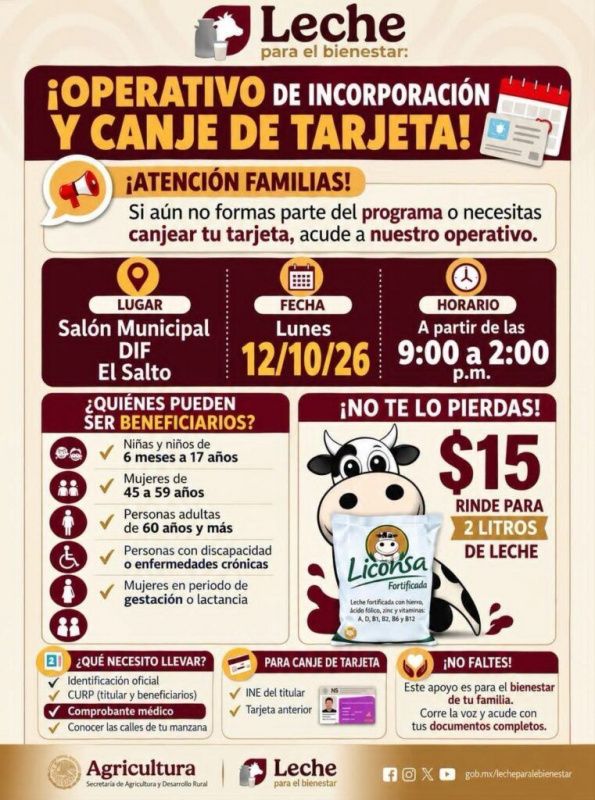
The public agency Leche para el Bienestar organised the event at the municipal DIF facilities in El Salto, the seat of Pueblo Nuevo. Officials accepted applications from new households and updated records for current beneficiaries whose identification cards had expired. The programme’s priority groups include children from six months to 17 years old, pregnant or breastfeeding women, people aged 60 or more, and people with disabilities or chronic illnesses.
Eligible households in the mountain municipality can buy the subsidised product at 4.50 pesos or 7.50 pesos per litre, according to the applicable rate. The programme’s registration work is intended to keep beneficiary records current and maintain access for households classified as having high or very high marginalisation.
Milk supplied to remote communities is distributed in long-life ultra-pasteurised form or as powder fortified with iron, zinc and B-complex vitamins. The powder format is used in areas where continuous refrigeration is limited. Supply is moved from drying plants and reconstitution centres in the La Laguna basin and the central valleys to delivery points in the Sierra Madre Occidental.
Municipal authorities work with the programme’s service modules to check official documents and applicants’ socioeconomic eligibility. The registration and card-exchange process is used to direct the allocated volumes from central warehouses to registered beneficiaries. Local DIF facilities also provide sites for the administrative operations.
The subsidised prices differ from those in Durango’s regular retail market. A litre of whole pasteurised milk in urban shops and convenience stores is reported to cost between 24 and 30 pesos, while specialised formulas cost more than 40 pesos per container. The programme is part of federal plans to extend coverage to 10m beneficiaries nationally.
Leche para el Bienestar’s supply chain also depends on milk bought from dairy farms in Durango and neighbouring states. The programme’s operating framework includes purchases from regional collection centres, while producers face costs for maize silage, dry fodder and protein concentrates. The Durango registration drive adds Pueblo Nuevo to the municipalities where the agency is updating beneficiary records and distributing cards through local public facilities.