Konstantin Korneev: Central Asia’s investment cycle could extend beyond 15 years
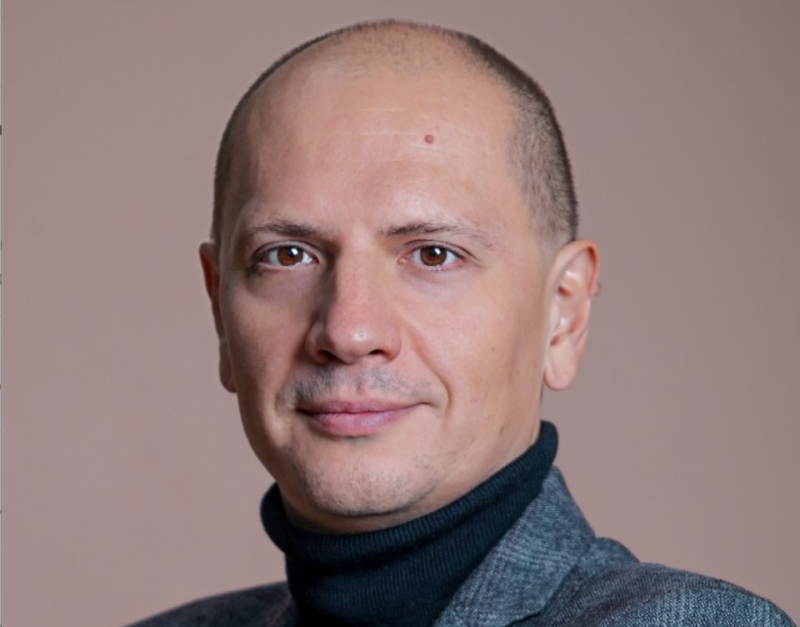
— Konstantin, as I understand it, you have been working very intensively in Central Asia in recent years.
— It is not just us: agriculture across Central Asia is developing rapidly. We simply go where investors are active.
— Then my first question is: from an agricultural investment perspective, is Central Asia a firebird or a mirage?
— It is a firebird flying toward a mirage. There is money, and there is a firebird—the question is where it will fly. Agriculture did not initially shape the investment profile of Central Asian countries. Money first flowed into mining, oil and logistics—industries that absorb far more capital. Only later did those investment pathways bring in people interested in agriculture. The reason is simple: the region is growing, household incomes are rising, and people want to eat more and better food. The next step is not just eating well, but exporting too. The whole question is where this money will be directed over the long term.
— I was asking about something slightly different. Investors from China, Iran and Qatar are now entering Uzbekistan and Kazakhstan. How likely is it that someone invests money and gets nothing back?
— That risk exists only in the event of political upheaval. What matters to an investor is that the region will grow and consumption will increase. The market is not contracting; it is expanding. That is the key answer for any investor: you are entering a growing market. You can lose money in any business, but it is much harder in a growing market.
— I see two main players in Central Asia: Kazakhstan and Uzbekistan. Suppose you have an investor who wants to build a farm with 2,000, 3,000, 5,000 or 10,000 head. Where would you put it: Kazakhstan, Uzbekistan, perhaps Kyrgyzstan?
— I would certainly build the farm in Kazakhstan. It offers proximity to feed resources, predictable climatic conditions and, incidentally, a clear legal framework for supporting investors. For raw milk production, that is where I would go.
As for finished products—cheeses and functional dairy products—I would look at developing supplies to Uzbekistan. And I might leave the final production stages in Uzbekistan itself to localize production. Uzbekistan is at a disadvantage in terms of climate and feed resources, and production costs are high. We should also remember that workforce skills differ. Frontline staff in Kazakhstan have more experience with advanced technologies.
This relates to the structure of the business. In Uzbekistan, more than 90% consists of dehkan farms—small family farms with limited access to expertise and finance. Kazakhstan, by contrast, has larger industrial enterprises with access to technology and financial resources. People there have been trained to work somewhat more efficiently.
— That sounded ironic: “somewhat more efficiently.”
— No, there is absolutely no irony; we compare this regularly. We are currently advising on a project for an agricultural holding in Kazakhstan. Its frontline technical specialists are very competent. It is genuinely a pleasure to talk to them: they understand what we are discussing.
Among the other countries, Kyrgyzstan will most likely establish itself in agricultural logistics: it is a transit route, including for Uzbekistan. Kyrgyzstan also has good potential for organic production. Fertilizers have not been applied there in adequate quantities for a long time, so completing the land conversion period required for organic certification will be much easier. But in terms of investment and scale, this is still an emerging opportunity.
In Tajikistan, investment is more likely to focus on basic production: flour milling, bread and bakery products, and pasta. The institutions that would make investors feel comfortable have not yet developed there. Entering independently from another country and launching a project would be very difficult: too many issues would fall outside the investor’s control. Bank lending and concessional financing, export support and logistics—all of these are shaped by the state, and investors would have to resolve each issue themselves. That means additional costs.
— I have never been to Tajikistan and have little idea of what dairy farming looks like there. What is it like?
— Like you, I cannot provide details about the country, simply because no investors have asked us that question. We have not had a single company planning to enter with capital. My understanding is based on the experience of colleagues working there. From an outside perspective, it is a growing region, and Dushanbe makes a positive impression as a developing urban agglomeration. But in agriculture, there is simply nowhere to “park” money yet.
— Are all the parking spaces taken?
— The parking lot has not been built yet.
— You said it is better to invest in livestock farming in Kazakhstan and processing in Uzbekistan. Are we talking about supplying raw milk or importing milk powder?
— We are talking about raw materials and production in Uzbekistan. A plant is built closer to its sales market because the plant is the gateway to that market. It would suit an agricultural holding to sell milk as a raw material, but we do not drink that much milk. We need yogurt, sour cream and butter, and those are made by processing plants. Demand for quality products is growing in Uzbekistan, but the cost of producing the raw material is high. That is why internationally integrated projects emerge.
Take IKEA: each country makes what it can produce more cheaply and efficiently, and those products then reach stores worldwide. The logic here is the same: you gain a raw-material cost advantage and transport the material. If the distance allows, you transport milk; otherwise, milk powder. There are no other options.
Uzbekistan is an open market with substantial imports from Russia and Belarus. You cannot compete with those imports when raw milk production costs are high. And they are high: average milk yields in Uzbekistan range from 2.4 to 4 tonnes per cow, with the latter being the upper limit. At those yields, production costs will be very high. Then there is expertise: veterinary risks and the risk of feed supply disruptions. You can lose money simply because you cannot obtain feed suitable for high milk yields. In my view, those risks are better mitigated in Kazakhstan.
— Throughout 2026, I have kept hearing investors from various countries say: “We want to break into Uzbekistan.” But I do not see much movement. Is it happening, just not visibly yet?
— When people say they want to break into Uzbekistan’s dairy market, they also need to consider the political landscape. There are many people who need employment, and two labor-intensive industries absorb that workforce: logistics and agriculture. If Uzbekistan pursues large, highly productive farms, workers will be displaced, with nowhere else for them to go yet.
Uzbekistan is therefore focusing on preserving traditional agriculture while strengthening oversight: animal health, the work of dehkan farmers and other farmers, veterinary programs, and centralized milk collection. I know that programs for milk collection points are now set to develop.
— The Indian model?
— Exactly. It is also included in United Nations (UN) recommendations. This model operates in Kyrgyzstan, and similar projects exist in Tatarstan. But investors want to understand where their money is going. Investing in 100–150 scattered small farms is impossible: it is completely beyond effective oversight. A processing plant, by contrast, is a large facility that can have a single owner and clear, measurable performance indicators. Before entering Uzbekistan’s dairy sector, an investor will see that it is highly fragmented. That is precisely what puts them off.
— Let us discuss subsidies. How does state support work in Kazakhstan and Uzbekistan, and how does it compare with Russia and Belarus? Every investor considers this when deciding whether to invest in the region.
— The answer is very short: a project must work without government subsidies. They are regularly revised, and their size depends on the money available in the budget. Building subsidies into an investment project is like assuming that red 18 will come up every time at a casino. A subsidy is welcome and improves project performance, but we never include it in the project’s underlying financial model.
Second, for investment projects, subsidies for capital expenditure matter most, rather than per-hectare support or payments per kilogram of milk, which are variable. The best option is a special investment contract under which the government signs a commitment to support a particular project throughout its implementation.
— But I would imagine that requires some special kind of project and investor.
— Not at all. One proposal that we hope to advance in Kazakhstan now is support for industries related to food security.
Why? Kazakhstan is becoming increasingly integrated into China’s commodity trade flows, and Chinese demand is reshaping its domestic market. China has a water shortage, so it is happy to import feed crops while producing its own milk and meat. Following the logic of those investments, Kazakhstan would produce large quantities of feed crops and earn money exporting them to China, but reduce its own meat and milk production.
So the first step is to assess the main sectors—grains, oilseeds, sugar, milk and all types of meat—and define the investment profile. It should combine the domestic market with exports; one does not work without the other. You need to provide your own population with affordable, quality food and ideally also be able to export. If a project is exclusively export-oriented, its performance is determined not by the producing country that creates the conditions, but by the buyer. That is extremely risky for the state budget.
A special investment contract, then, is not about an investor with the “right” surname or position. It is about the state supporting investment in its priority areas.
— Still, back to subsidies. DairyNews and I personally have faced considerable criticism in Kazakhstan for opposing per-liter milk subsidies. My reasoning is simple: large players take most of the money, and in my view this does nothing to develop the sector. Would it not be more effective to subsidize investment and support each liter of milk only for a limited period? And is there a country where subsidies work effectively, whose model could be adopted in Central Asia?
— There is no agriculture without subsidies: every country supports it in one way or another. America, Canada, Europe—support is enormous everywhere. And you are right in the sense that support alone is not always effective.
— I would challenge that about America. I have visited the United States many times and asked farmers what they receive from the government. Many said: nothing.
— The money there is not paid directly into their bank accounts. If you produce a particular product, you must belong to an industry association: you cannot produce sweet cherries or milk without being a member. The association has two sources of funding: farmers and the government. Support comes not through direct payments, but through subsidized insurance, capital support and marketing in foreign markets. This depends on market maturity: new projects are now almost impossible to find in the United States or Canada. The last ones I remember were hemp projects a few years ago.
What you are describing is not what farmers and investors in the post-Soviet region understand by a subsidy. There, it is simple: here is my pocket, put the money in it.
— The United States also has a mechanism that kicks in when milk prices fall below a certain level: a fund supports those affected by low prices. I do not recall other direct payments there. But the question remains: should payments be made per kilogram, and what should subsidies in Central Asia look like? In Kazakhstan, people constantly point to Russia and Belarus: their subsidies are many times larger, so things are good for them and bad for us.
— That is certainly not the reason. A subsidy cannot work on its own. It needs two other things: insurance and digitalization. If you do not understand how your risks are insured and cannot monitor the business digitally, the subsidy is wasted.
Suppose a farmer reports milk yields and receives the equivalent of $10,000. But if the farm is uninsured and animal health is not monitored, the animals may die or be sent for slaughter. The farmer will say: these things happen. And the state will ask: what did I get in exchange for that $10,000? Are people eating better? Has quality improved? No, you simply subsidized a kilogram of milk.
So before subsidizing a unit of output—a kilogram of milk or meat, or a hundred kilograms of yield per hectare—you need to set performance criteria. For example: we support only farms that will produce at least 6,000 kg per cow, sell at least 95% of their milk output, and meet specified protein and fat content requirements. At the same time, we support the capital expenditure required to establish such a farm. The result for the state is a farm with production resilience for at least the next 10 years.
— But if a farm meets those criteria, it is probably already economically efficient. Why does it need additional money?
— Let us break it down. You are starting a business and want to build a farm. Your first support is a concessional loan: you need to construct buildings, buy tractors and create infrastructure. The state says: here is support for capital expenditure (CAPEX), but only for a farm that will meet the criteria. If you are going to produce 2,000 kilograms per cow, there is no point supporting you: you will be loss-making and close anyway.
After that, support functions as revolving investment. The farmer launches the first phase and achieves a good milk yield; the state pays a subsidy for the result achieved, like a bonus. A sensible manager spends a bonus on education, not just a new car. The same applies here: the investor reinvests it in the business. If all the margin is withdrawn from the business, it will lack the financial resilience needed to develop. That is what a subsidy is for. Simply paying money per kilogram—what is the point if the state gets nothing in return?
— And how long should an investor receive such a subsidy: for life, or for a fixed period?
— It depends on market maturity. In Russia, peak productivity, given the climate and feed resources, has practically been reached: cows have genetically approached the limit for that agroclimatic zone, and a subsidy will no longer bring a qualitative change. At that point, the state’s task is not to cut the subsidy but to raise performance criteria. Usually, however, support is provided for the project period until it pays back. From an investor’s perspective, that means at least seven years.
— Let us turn to staffing. You mentioned workforce problems in Uzbekistan, although this is a perennial issue across the market. How are major investors addressing the staffing problem today?
— To begin with, skilled workers are aging. In about five years, those with practical knowledge will already be retiring, while younger people are more digitally oriented. There are two ways of addressing this. The first is bringing in consultants from other countries to transfer knowledge. I know there is active cooperation with Argentina and Brazil: they have many middle-aged specialists with solid practical experience. European experience, oddly enough, is now valued less: it is more about environmental, social and governance (ESG) issues. To run a proper business, you need to know how a cow is feeling, how to treat it and how to feed it.
The second is working with young people and creating a psychologically comfortable workplace, because staff turnover is high and other sectors draw people away very strongly. That is why the industry will actively digitalize.
— I have the impression that dairy farming is one of agriculture’s most labor-intensive sectors. Managing large teams requires substantial investment in management systems, and digitalization helps with precisely that.
— It should help, but it does not yet replace people. What we see in China—highly digitalized, automated farms—must be distinguished from private investment. A private investor simply could not afford that infrastructure. It is a kind of showcase of national economic achievements.
Chinese investment generally has little connection with production profitability. A Chinese investor’s first priority is implementing the overall policy direction: the state provides money for investment in a particular area. Whether there is a profit is a secondary question. The first is whether the investment fits the overall development program. And another question is: where in Kazakhstan or Uzbekistan would you find people able to install those systems, maintain them and interpret the data?
— How would you assess the level of automation in Central Asia?
— Imagine a gauge with its needle at zero. You press a button: it twitches, rises slightly and then remains near the starting point. That reflects the nature of this market: the structure of dehkan farms makes them very difficult to automate. They are small and rely more on generations of experience. That is why it is called traditional agriculture: there is much more lived experience than data.
— The Russian factor, including Belarus. How strongly do developments in those markets affect Central Asia, given Kazakhstan’s and Uzbekistan’s heavy dependence on imports?
— They effectively set prices for this market. Changes in milk and meat prices there are immediately felt here. Retail prices for finished products depend heavily on imports, and Russia and Belarus set the benchmarks here for both quality and price. The influence of imports is very strong.
— Imagine an entrepreneur who is passionate about their business and wants to invest in agriculture. Where should they look for money: local banks, national programs or abroad?
— That is the hardest choice at the outset. It depends on which market you are entering and whether it meets the risk and support criteria at all. If you are pursuing a very niche project—growing organic dandelions for jam, for example—it will be difficult to find a financial partner.
— Unless it is a business angel who provides the money and never asks where it went.
— That is usually called an unsuccessful investor. Seriously, though, there are three questions: how large is the market, how is it growing, and is there room in it—in other words, how concentrated are the players? The choice of financial partner depends on the answers.
If the market falls within a food security, import substitution or export development program, it makes sense to work with local banks—but only as local intermediaries for the funding. Commercial bank interest rates in Central Asia are exorbitant: anything above 14–15% simply does not pay in agriculture; those margins do not exist. You therefore need financial instruments from foreign institutions or funds. The local bank acts as an intermediary: it issues guarantees and handles the disbursement of funds. It can also administer state support.
This requires a multilayered financing structure. And, of course, you should make use of partnerships with equipment manufacturers: they have their own banking relationships, and you can at least obtain concessional financing for machinery, whether European, American or Chinese. The Chinese even have dedicated programs subsidizing their own equipment. What you do with it afterward is another question, but they will provide financial support.
— “The first tractor is free.” Since we are discussing bank interest rates, what level of profitability in dairy farming in our regions is acceptable to an investor, and what is actually achievable?
— Naturally, investors want as much as possible. But thinking you need to impress an investor with a very high project internal rate of return (IRR) is a major mistake. If the IRR is significantly above the market, there is a hole somewhere in the model: either the calculations are poor or the risk is high. When people say, “Bring us your money for a high return,” you end up with an MMM-style pyramid scheme. An investor will not go into MMM; they want a sound business.
I would estimate the unsubsidized IRR of a dairy project in Central Asia at around 8%. A comfortable level for an investor is around 12–14%.
— So the cost of money is as high as the return the business generates?
— If you mean whether putting money on deposit is more profitable than investing in agriculture, the current situation is paradoxical: deposits outperform almost every type of business, except perhaps high-tech pharmaceuticals. But investment is not only about returns; it is also about advantages that will pay off in the future. In exports, for example, it means controlling a sales channel: starting with your own business, you can then bring other producers’ products into that channel.
If an investor from outside the sector says, “I want to buy a farm and collect rental income from it,” that is a difficult path, and it will probably not end very happily. But if an industry investor says, “I want a farm so I can enter the functional food or cheese segment and work with hotels, restaurants and cafés (HoReCa) and food service,” that clearly explains the enterprise’s strategic focus. The raw-material market in itself is not particularly attractive: almost all markets are saturated, and buying raw materials is not a problem. Even in Uzbekistan, the milk shortfall is just over 10% according to official figures—not a dramatic number.
— Surely you do not believe the official statistics?
— Even their authors do not have much faith in them. Let us talk about what we do believe. We believe that once the raw-material shortfall is covered, there is only one competitive factor: price. There are no others. If you invest for the long term, you need to understand the additional value you offer: a brand, a product, a unique production process or unique sales channels.
You know better than I do when dairy producers start worrying: when prices begin to fall. “Cheap imports have arrived, all is lost, give us money.” There is a clear contradiction between these dramatic laments and the lifestyles of those making them. But if raw-material prices fall while your customers make quality products specifically from your raw materials, the supply relationship will hold. Changing suppliers every week is not convenient for a dairy plant either.
— So you would not recommend building a standalone farm?
— Not a standalone one, no. Just as I would not recommend growing sunflowers simply because they look beautiful and you more or less understand what to do with them.
— Livestock farmers with large farms often start moving into processing. Nearby processors say: “What are you getting into? That is a different business, with its own problems and marketing.” I always encourage them: go ahead, vertical integration is good. Either you work with the consumer, or you produce exceptionally good raw materials and become a cost leader through digitalization, productivity, veterinary care and feed. But where do you get the money for that? It is the eternal dilemma.
— It is simple: becoming a raw-material champion is achievable—you just need to build the largest company in the market with the most advanced solutions. That is a joke. But if you are moving step by step, you need to see the entire distribution chain and understand where you make money, what your competitive advantage is, and what upside the market offers. There have been countless projects, especially in crop farming, where people bet on high prices, then prices collapsed and they had no cushion.
— Finally, what is the most successful project you have completed? You do not have to name the company.
— A difficult question. I will name the most interesting one. It was KazExportAstyk in Kazakhstan: several weeks traveling through different climate zones, sites and farmland—all within a single business entity. I have never encountered such a volume of diverse data covering crops, livestock, storage, processing and logistics. When we worked there, it had almost a million hectares. The assets are now fragmented.
In dairy, the most interesting assignment was the audit of EkoNiva. I am not talking about the business as a whole, with all its finances and loans, but specifically its approach to production. That is where I saw the greatest love for the dairy business. The entire operation started with the cow and the milk; there were no “second-class” sites, and everything was built on expertise in this field. Of all the farms we examined, none came close in terms of genetic and resource resilience or the foundations laid in the biology of production.
— I would like to end on love, but I have one more question. Briefly, what is your investment forecast for the former Soviet countries: where will the money go?
— Central Asia will receive the largest amount. Its most serious constraint is water. But given the current economic, political and logistical constraints, Central Asia is in the most favorable position. Whether we like it or not, it will objectively attract more and more projects and investors because it has room to develop. The second destination is Southeast Asia, Indonesia and Vietnam, where growth will also be sustained. But Central Asia, with its population, will naturally attract capital. I see its investment cycle as emerging and, moreover, long-term: more than 15 years.
There are two main risks. The first is an objective climatic risk: water. The second is political: whether governments can create long-term, transparent conditions for investors. If they can, everything will be excellent.
— I would like to finish with one word: inshallah.
— Exactly.
Konstantin Korneev will speak at the first session of the AqAltyn 2026 congress, “Eurasia’s Dairy Industry Amid Instability,” on November 30 in Shymkent.
General Partner — Borte Engineering https://engborte.kz/
As a leading domestic manufacturer in Kazakhstan, Borte Engineering develops high-tech equipment for the food industry, with its quality recognized through inclusion in the Register of Domestic Manufacturers. The company successfully works with businesses across Central Asia, strengthening the regional economy.
Other event partners include:
CRI Kazakhstan https://cri-kazakhstan.kz/
MEGA a.s. Czech Republic https://www.mega.cz/dairy
DSM Food Specialties Poland Sp. z o.o. https://www.dsm-firmenich.com
Dairy Union of Kazakhstan https://kazsut.com/
France Group https://francegroup.org/ru
Qazaq Sut Association https://qazaqsut.kz/