
Gruyère Association Showcases Cheese-and-Coffee Pairings in Brussels
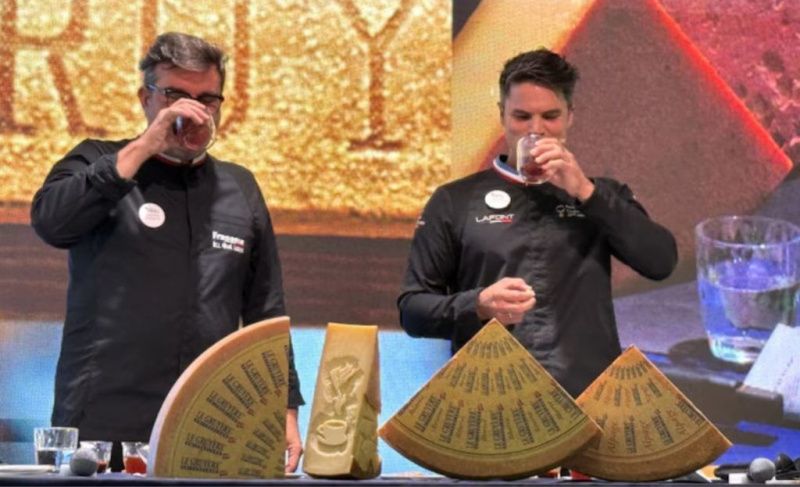
The pairing was presented in late September at Drogenbos Castle, near Brussels, before about 200 Belgian, Dutch and French cheese merchants. The Swiss Gruyère association also released a book celebrating the combination of the cheese and coffee.
The programme included a talk by Arnaud Sperat Czar of the Raw Milk Foundation on the characteristics of raw-milk cheeses, a meeting with the official curators of the Gruyère region, cheese sculptures, tastings and a gala dinner. The tasting was led by Paul Arnephy, an Australian coffee specialist, and François Robin, a French cheese expert. Both hold the Meilleur Ouvrier de France title, in coffee and cheese respectively.
Robin said that coffee and cheese share a dependence on the quality and origin of their raw materials. He compared the influence of terroir on flavour with the differences between coffee-growing regions. He also stressed that Gruyère can only carry that identity when it is made within Switzerland’s protected area and from milk produced under the designation’s rules, which prohibit fermented silage in the diet of the relevant herds.
The first pairing used an eight-month-old Gruyère with a Guatemalan coffee from an area near the Mexican border. The blend contained Arabica varieties including caturra, catuai and San Ramon. The second cheese, made in summer 2025, was served with cold brew, produced by extracting coffee in cold water over roughly a day. Its fruity, buttery and slightly spicy character was matched with the coffee’s mint-like notes.
The oldest cheese in the tasting had a deep yellow paste and pronounced savoury, fermented-fruit and umami flavours. It was served with a blend containing 15% Ethiopian beans and 80% Brazilian beans. The Brazilian component included 60% coffee from Mantiqueira de Minas and 25% from Daterra, a protected-origin designation in Brazil’s Cerrado region. Milk was added to the coffee, highlighting the cheese’s dairy notes and bringing the tasting to a sweeter finish.
For home tastings, the organisers advised trying the cheese and coffee separately before combining them, while recording flavours, sensations and memories. They said a successful pairing should allow each component to reinforce the other rather than dominate it. Arnephy also served cheese dipped in orange liqueur and coffee. Robin showed merchants how to form Gruyère into a geometric shape, recommending a younger, more flexible cheese and a cheese harp for cutting.










