Gilly Uses Fungal Fermentation to Process Tomato Pomace for Dairy Cattle
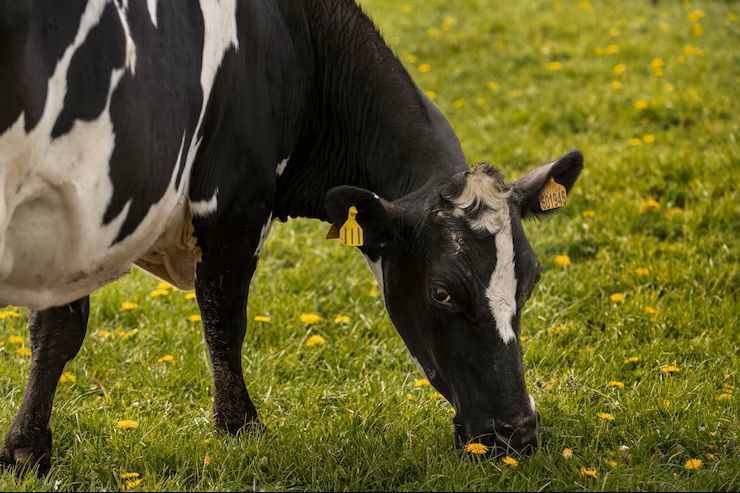
Gilly conducted the first commercial trial in January 2026 at Trinkler Dairy in Modesto, California. The test used tomato pomace, a by-product of the canning industry, in rations for 130 dairy cows. Over two weeks, the company assessed the ingredient’s palatability and reported continued acceptance by the animals.
The startup’s process uses solid-state fermentation, in which non-genetically modified fungal strains grow on organic material with limited water availability. Gilly’s founders say the strains were selected for rapid growth and their ability to tolerate changes in temperature and acidity.
According to the company, the three-day process raises crude-protein concentration in the agricultural residue from 15% to 23%. It also reduces anti-nutritional compounds, including tannins, lectins and phytates. The resulting biomass is intended to serve as a higher-value nutritional ingredient for dairy rations.
Gilly estimates that adding the fermented material could lower the cost of a daily ration by 5% to 10%. The company puts the potential saving at about 50 cents per cow per day. To expand production, it plans to use decentralised processing modules located near dairy regions or processing plants, with each module designed to handle 20,000 tonnes of raw material a year and reduce logistics costs.
The initial trial did not assess milk volume or composition, rumen digestibility, feed efficiency or changes in body condition over a full lactation. The source also notes that the product’s technical performance still requires independent scientific validation.
Large-scale commercialisation would require microbiological and chemical controls to check for mycotoxin contamination and maintain process traceability. Gilly is also considering future trials involving soybean hulls, almond hulls and dried distillers grains with solubles, or DDGS.