French dairy farm aligns 130 cows’ calving season with spring grass growth
Grandin began farming independently in 2012. In March 2024, he joined a family GAEC, a joint agricultural enterprise with four members. His herd combines Holstein ancestry with genetics from other breeds, producing smaller, hardier cattle suited to a grazing-led system.
Calving runs from the beginning of February until the middle of April. Grass growth generally reaches its peak in late April, and the farm seeks to bring the lactation cycle into line with that seasonal supply. Grandin says this timing enables cows to obtain the greatest nutritional benefit from grazing when their lactation requirements are highest.
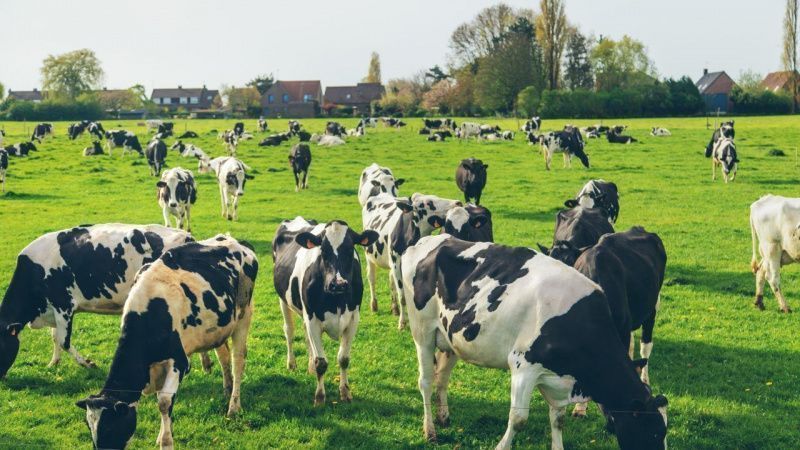
The breeding window opens in late April and closes before early July. This schedule helps avoid the adverse effects of summer heat on fertility. Other work follows the same annual calendar: forage is harvested after breeding, and the herd has been dried off by the beginning of December. During winter, the cows stay outside, feeding on hay bales placed in their paddocks.
After giving birth, each cow spends a week with her calf in a separate colostrum group. Milking takes place once a day during that week. The cows then enter the commercial milking herd and move to two milkings a day.
Grazing provides a central part of the diet. Grandin believes it helps produce a more favourable balance between omega-3 and omega-6 fatty acids in both meat and milk. The beta-carotene supplied by fresh grass also gives the milk a deeper natural yellow colour. These nutritional characteristics are associated with dairy production based on pasture.
The farm combines breeding choices, reproductive management and the management of its grassland to increase the use of forage grown on the holding. Its stated aim is to improve production efficiency and maintain animal health by matching feed requirements with available grass. Seasonal calving provides the framework for organising grazing, breeding, forage conservation and the winter feeding period.
INTAQT, a five-year research initiative financed through the European Union’s Horizon 2020 programme, examines how livestock production methods relate to the quality of products from chickens and cattle. Its “One Quality” concept aims to demonstrate that both extensive and intensive systems can consistently supply safe, nutritious and enjoyable animal products while supporting more sustainable livestock production.